Rosehip Oil: What It Does and What It Doesn't
Rosehip oil has a reputation that outpaces its evidence — but not by as much as you might expect. Here's what the research actually supports, where the gaps are, and how to use it well.
Read articleWe use Google Analytics to see which articles get read. You can accept or decline analytics cookies. See our Privacy Policy.
How to read a study, interpret a claim, and tell mechanism from marketing.
38 articles
Rosehip oil has a reputation that outpaces its evidence — but not by as much as you might expect. Here's what the research actually supports, where the gaps are, and how to use it well.
Read article
Glycerin appears in more skincare products than almost any other ingredient, yet it rarely gets its own moment. That's partly because it's cheap, unsexy, and difficult to build a marketing campaign around — but it's also one of the most reliably useful things you can put on your skin.
Read article
Caffeine is the star ingredient in most eye creams, promising to banish dark circles and puffiness overnight. The reality is more nuanced — it does something genuine, but not quite what the packaging suggests.
Read article
The skincare industry has built an entire product category around 'minimising' pores. Some of those claims are grounded in real biology — but the idea that pores open, close, or disappear is one of skincare's most persistent myths.
Read article
Kojic acid is one of the more effective over-the-counter options for fading dark marks — but its instability problems and irritation potential are real, and the gap between its reputation and its evidence base is worth understanding.
Read article
Alpha arbutin is one of the gentler options for fading dark marks and evening out skin tone — but gentler also means slower, and the evidence has limits worth knowing about.
Read article
Double cleansing has become a non-negotiable step in some routines — but the science behind it is simpler than the discourse suggests, and not everyone needs it.
Read article
Snail mucin has gone from niche K-beauty curiosity to mainstream bestseller. The ingredient list is genuinely interesting — but the gap between what's in the filtrate and what reaches your skin is wider than the product pages suggest.
Read article
New active making you break out? It might be purging — or it might be a reaction. The difference matters, because one means the product is working and the other means it needs to go.
Read article
Polynucleotides are the injectable everyone suddenly wants — and the ingredient serum brands are rushing to bottle. The two are not the same thing, and only one of them has much evidence behind it.
Read article
Hyaluronic acid is the skincare industry's favourite humectant — but the gap between what it does on a lab bench and what it does on your face is wider than the marketing suggests.
Read article
"Clinical strength" and "clinically proven" aren't regulated terms in skincare — they can mean anything from a rigorous trial to ten people asked if they liked the product. Here's how to actually evaluate the evidence.
Read article
Bakuchiol is marketed as a gentler, plant-derived stand-in for retinol. The headline study behind that claim is smaller and more caveated than the marketing suggests — here's what the evidence actually supports.
Read article
Peptides get sold as everything from 'Botox in a bottle' to a collagen cure-all. They're a broad category, not one ingredient — and what they can actually do depends entirely on which peptide you mean.
Read article
"Triple ceramide," "bio-identical ceramides," "ceramide complex" — the marketing has run well ahead of most people's understanding of what these ingredients actually do. The underlying science is solid; the labels often aren't.
Read article
Oily skin, shiny T-zones, clogged pores — sebum gets blamed for all of it. But it's also doing genuine protective work, and the products that fight it hardest often make oiliness worse, not better.
Read article
Panthenol never trends, never headlines a product, and has genuinely good evidence behind it anyway — it just doesn't produce the kind of before-and-after that sells a serum.
Read article
Centella asiatica shows up on nearly every 'soothing' product label, but the ingredient list rarely says which of its active compounds are actually present — and that's the detail that decides whether a centella product does much at all.
Read article
Alpha-hydroxy acids get sold as one category, but glycolic, lactic and mandelic acid behave differently enough that picking the wrong one is a common reason an acid "doesn't work" — or works too well, too fast, in the wrong direction.
Read article
Tranexamic acid moved from operating theatres to skincare shelves on the back of a genuinely interesting discovery — but the strongest evidence is for the oral, prescription version, and the topical version people are actually buying is thinner and newer than the marketing implies.
Read article
Retinoids and vitamin C get the headlines. Azelaic acid quietly does three jobs at once — acne, rosacea and pigmentation — with a gentler side-effect profile than most of the ingredients that outrank it in popularity.
Read article
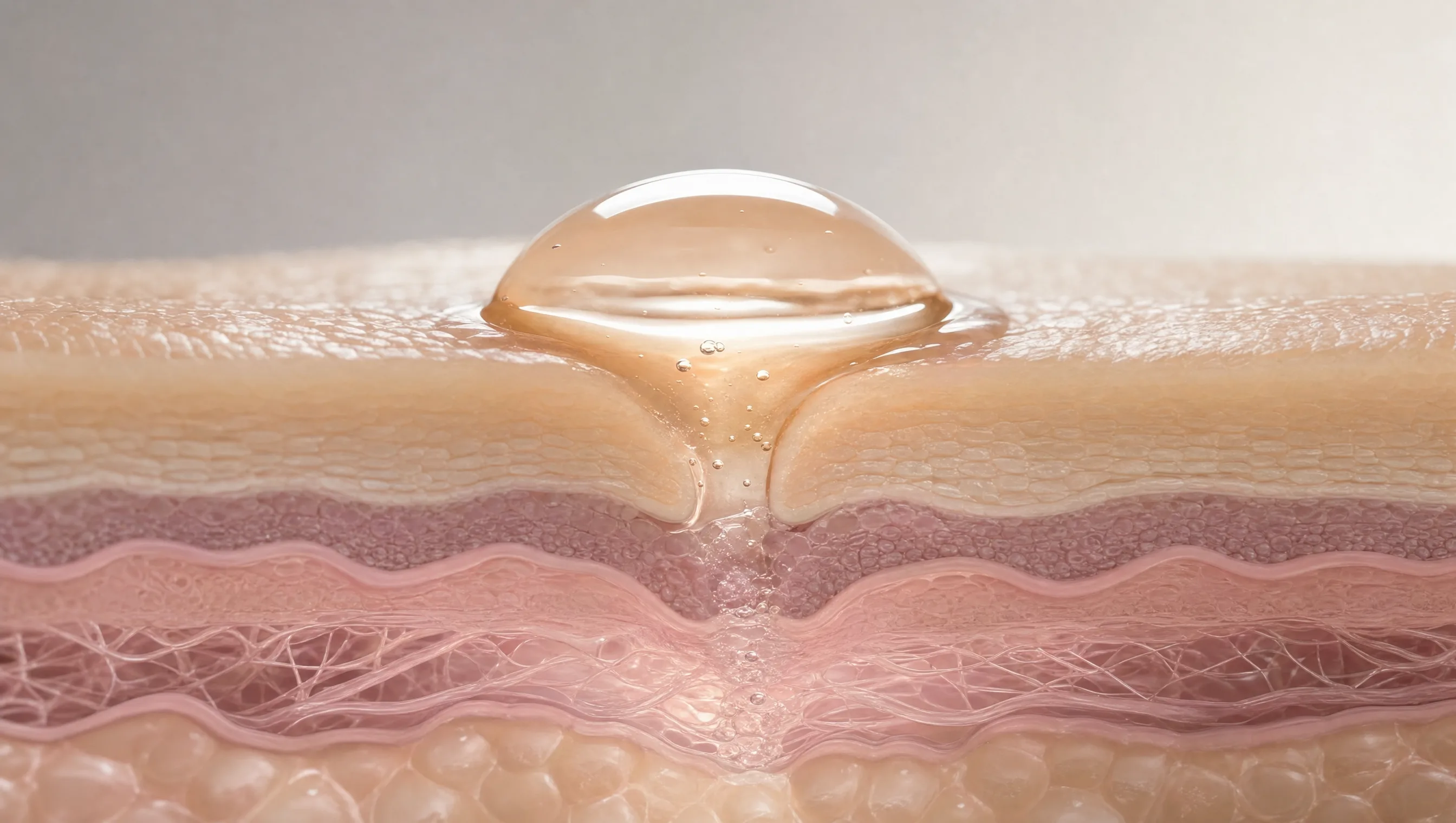
Niacinamide (vitamin B3) has become a skincare darling — appearing in everything from serums to sunscreens, praised as a solution for nearly every skin concern.
Read article
"Preservative-free" is marketed as inherently safer, but a water-based product with no preservation is often the riskier bottle on the shelf. The chemistry says otherwise.
Read article

Skincare marketing cites "studies" constantly. Most of those studies would fail basic scrutiny — here's what to actually check before a claim earns your trust.
Read article
'Microbiome-friendly' has no regulatory definition, and most products trading on the word are capitalising on genuine scientific interest rather than delivering proven microbiome benefits. Here's what the research actually supports.
Read article
Vitamin C is one of the most researched skincare ingredients — and one of the most confusing.
Read article
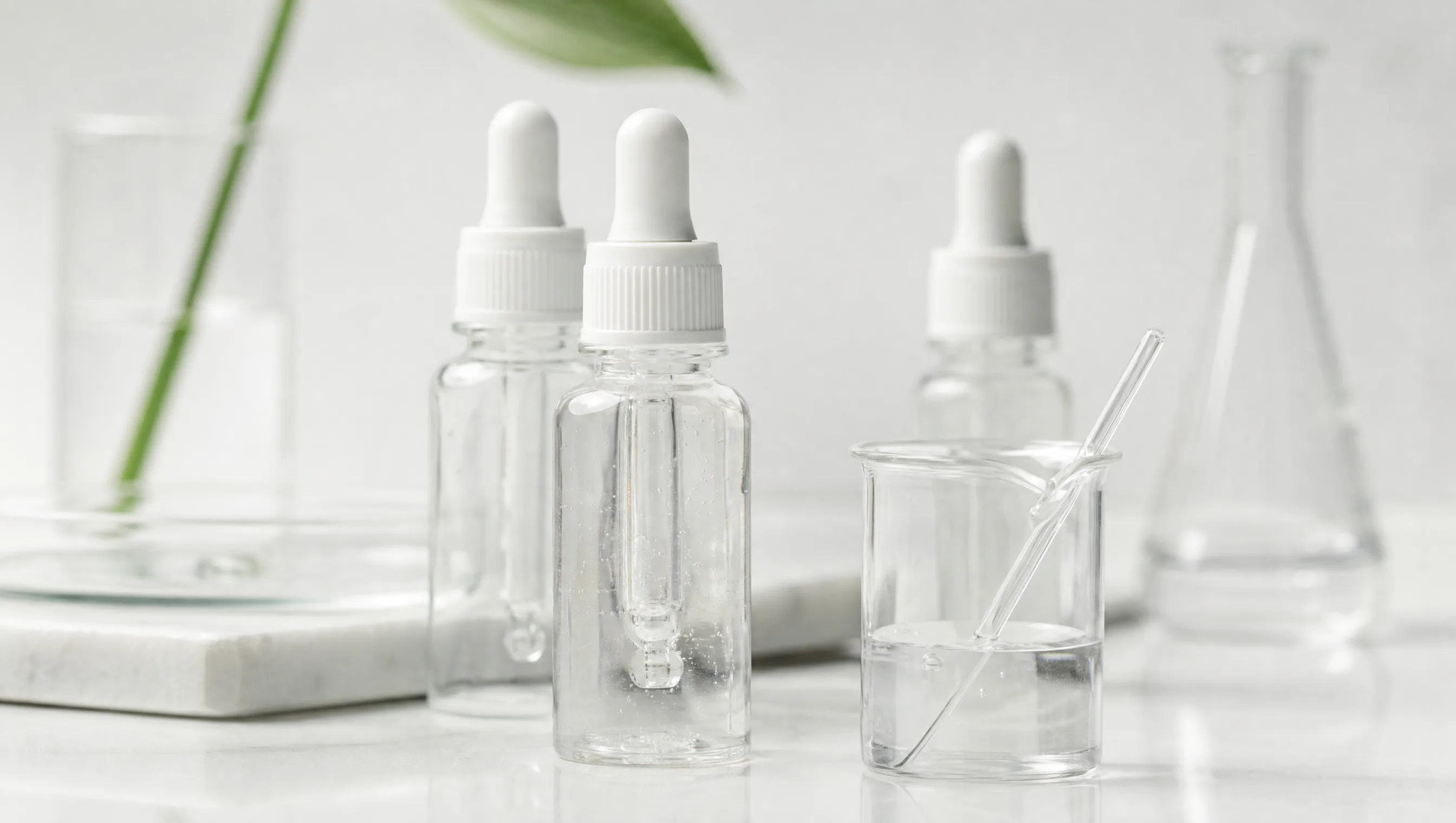
Not all retinoids are created equal. The term covers a family of vitamin A derivatives with vastly different potencies, evidence bases, and effects on skin.
Read article

Growth factor serums can cost hundreds of pounds on the promise of cellular regeneration. They're not peptides — they're much larger proteins facing much bigger delivery problems, and the evidence hasn't caught up with the price tag.
Read article
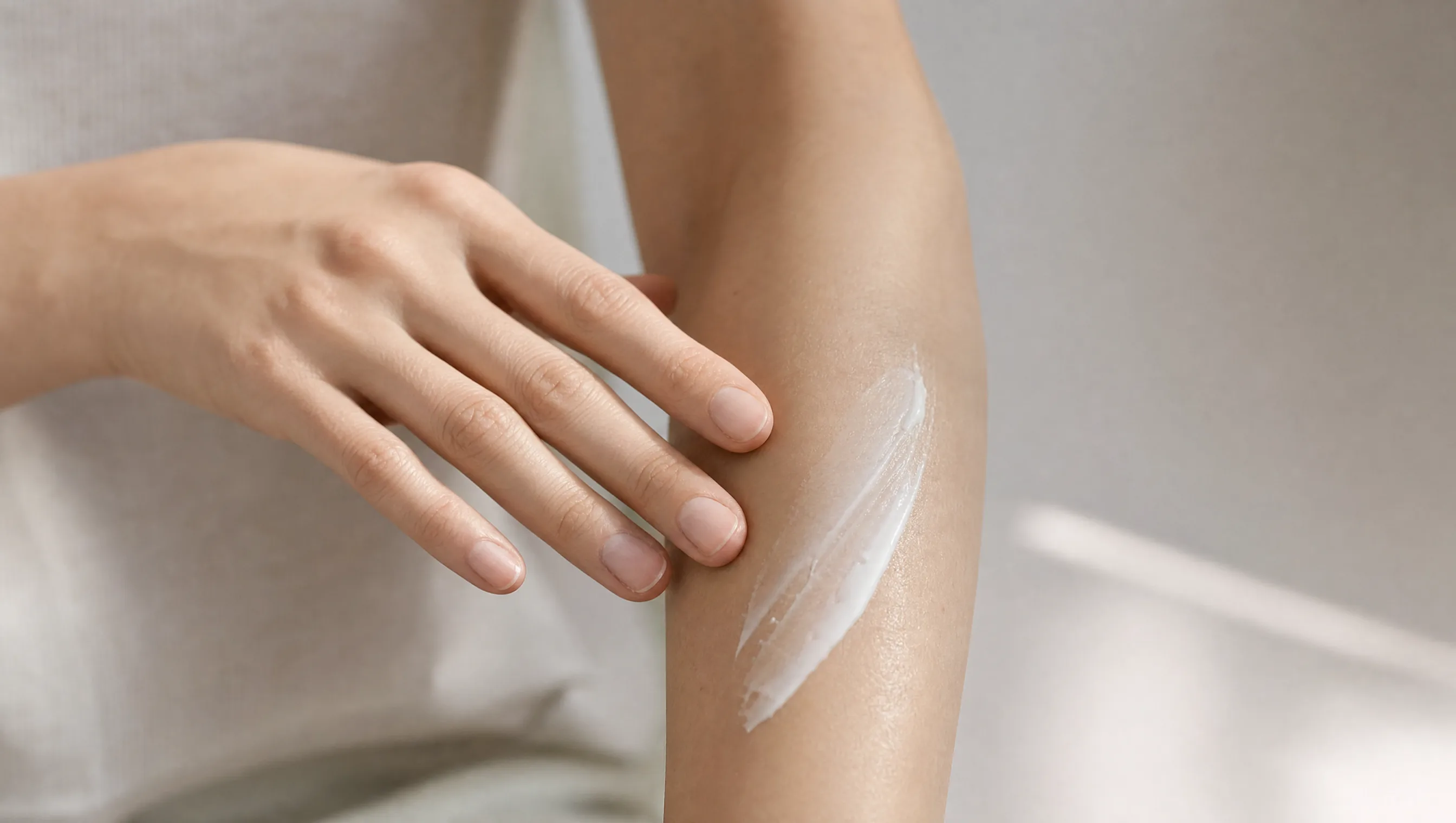
Of all the peptides sold on anti-ageing claims, copper peptides (GHK-Cu) have the strongest research behind them — genuine wound-healing evidence, and cosmetic trial data that's real but more modest than the marketing suggests.
Read article

A nicotine patch and a moisturiser both sit on skin, but one is engineered to reach your bloodstream and the other was never meant to. That distinction is why 'deep penetration' skincare claims almost never mean what the marketing implies.
Read article
Over-exfoliation causes the same symptoms it's supposed to fix — oiliness, texture, breakouts — which pushes people to exfoliate harder. Here's how the feedback trap works and what appropriate exfoliation actually looks like.
Read article
Stinging products, sudden dryness, a rough texture and shiny-but-tight skin are all barrier distress signals — not signs you need to exfoliate harder. Here's how to spot the pattern and what it means for your routine.
Read article
Liposomes, nanoparticles and cyclodextrins are genuine delivery technologies with real research behind them — and also some of the most reliably overstated words on a skincare label. Both things are true at once.
Read article
Copper peptides and Matrixyl have genuine clinical evidence behind them. 'Topical Botox' peptides mostly don't. Here's a category-by-category audit of what the research actually supports, and why in vitro results can't be trusted at face value.
Read article
Two products can list the same active at the same percentage and behave nothing alike. pH, stability, vehicle and penetration enhancers decide what actually reaches your skin — the label doesn't.
Read article
One number quietly decides whether an ingredient can physically reach your skin at all. Here's what the 500 Dalton rule actually means for hyaluronic acid, collagen, peptides, and every 'deep penetration' claim on the shelf.
Read article
Skin is built to keep things out, so how can a serum change anything? The answer is that skin is selective, not sealed — and a handful of physical rules decide what gets through.
Read article
Rosacea gets bundled into generic 'sensitive skin' advice, but it's a specific, diagnosable condition with its own subtypes, triggers and treatments — recognising which subtype you have changes what actually helps.
Read article