Azelaic Acid: The Underrated Multitasker
Retinoids and vitamin C get the headlines. Azelaic acid quietly does three jobs at once — acne, rosacea and pigmentation — with a gentler side-effect profile than most of the ingredients that outrank it in popularity.
Azelaic acid does not photograph well. There’s no dramatic before-and-after, no single mechanism you can reduce to a headline, and it’s been quietly available for decades rather than launching amid a marketing push. What it does have is genuine, FDA-approved evidence for two conditions at once — acne and rosacea — plus a reasonable case for pigmentation, all with a tolerability profile that beats most of the actives it gets compared to.
What it actually is
Azelaic acid is a naturally occurring dicarboxylic acid, found in grains like wheat, barley and rye, and also produced by Malassezia yeast that lives on everyone’s skin. Unlike most acids in skincare, it isn’t primarily an exfoliant — its mechanisms are more targeted and, frankly, more interesting than “dissolves dead skin cells.”
How it works
Azelaic acid does several distinct things at once, which is part of why it can address acne, rosacea and pigmentation without needing three separate products.
It has antimicrobial action against Cutibacterium acnes (formerly Propionibacterium acnes), the bacteria implicated in acne — and unlike topical antibiotics, bacteria don’t appear to develop resistance to it, which matters for anyone using it long-term. It has an anti-keratinising effect, normalising the process by which pores become blocked, helping prevent new comedones rather than just treating existing ones. It’s meaningfully anti-inflammatory, working through inhibition of reactive oxygen species and a reduction in inflammatory cytokines — the mechanism behind its rosacea and redness benefits. And it inhibits tyrosinase, the enzyme responsible for melanin production, with some selectivity for abnormally active melanocytes — which is part of why it tends to target hyperpigmented areas rather than lightening normally pigmented skin uniformly.
What the evidence actually supports
Acne. This is azelaic acid’s strongest claim. At 15–20%, it’s FDA-approved for acne and studies suggest it performs comparably to 5% benzoyl peroxide, 0.05% tretinoin, and topical antibiotics for mild-to-moderate acne, working on both inflammatory and comedonal lesions.
Rosacea. Also strong evidence. 15% azelaic acid gel is FDA-approved for rosacea, reducing inflammatory papules and pustules and helping with background redness. It’s one of the few prescription options specifically for rosacea and holds up reasonably well as a maintenance therapy.
Hyperpigmentation. Moderate to strong evidence, particularly for post-inflammatory hyperpigmentation and, as part of a combination approach, melasma. It’s a genuinely useful option for darker skin tones where hydroquinone can cause complications, and it’s sometimes combined with tranexamic acid — a different mechanism entirely — for melasma that isn’t shifting with a single ingredient.
Post-inflammatory erythema. The evidence here is thinner and more promising than proven — the anti-inflammatory action plausibly helps with the red or purple marks left after acne clears, but dedicated research specifically on this is limited, so treat it as a reasonable hypothesis rather than an established benefit.
Prescription vs over the counter
Prescription-strength azelaic acid (15–20%, e.g. Finacea gel, Skinoren cream, and generic equivalents) has the strongest evidence base and tends to work faster. Over-the-counter versions, typically 10% or under, are less potent but can still be genuinely useful — particularly for maintenance once a concern is under control, or for milder concerns that don’t need prescription intensity. That said, it’s worth reading concentration claims on OTC products with some scepticism generally — a higher percentage on the label doesn’t automatically mean a better result.
Where azelaic acid actually earns its reputation
It’s remarkably well-tolerated compared to most of the actives it’s stacked up against: it doesn’t thin skin the way retinoids can, it’s generally less irritating than benzoyl peroxide, it doesn’t cause photosensitivity, and dryness tends to be minimal relative to other acne treatments. It’s also Category B for pregnancy — one of a very short list of genuinely effective active ingredients considered appropriate during pregnancy and breastfeeding, which makes it a default option for anyone in that situation who still needs to treat acne or rosacea.
The combination of antimicrobial, anti-inflammatory and anti-pigmentation effects means it can address overlapping concerns at once — acne plus the marks it leaves behind, or rosacea plus uneven tone — without needing a separate product for each. And because resistance doesn’t develop the way it does with antibiotics, it’s genuinely sustainable for long-term, ongoing use rather than something to be cycled on and off.
The honest limitations
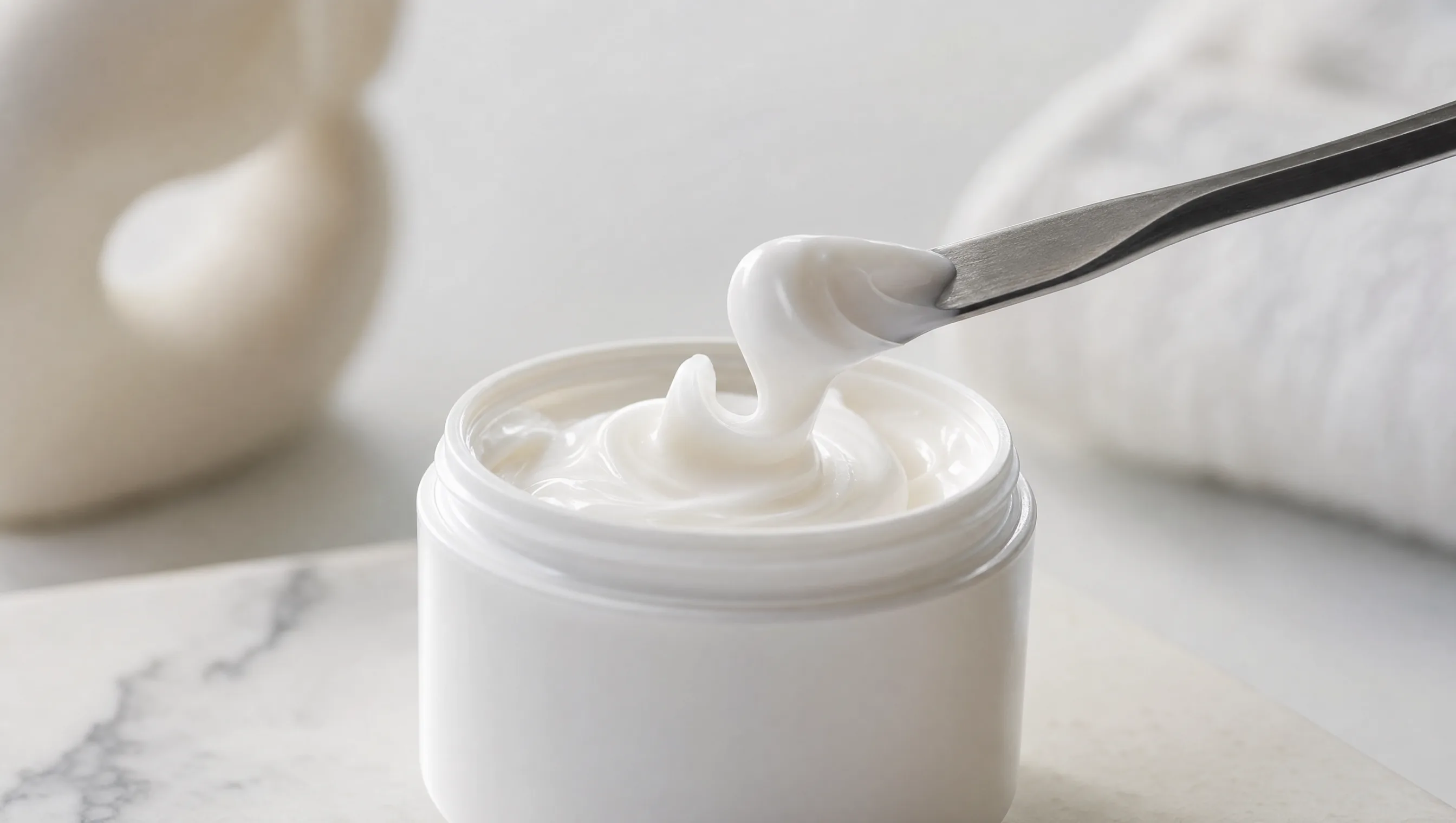
Some prescription-strength formulations, particularly certain creams, have a notoriously difficult texture — thick, slow to absorb, and prone to pilling under other products. Gel formulations and some OTC options are more cosmetically elegant, but it’s worth knowing this going in rather than being surprised by it.
Despite the generally gentle profile, azelaic acid can cause tingling or stinging on application, mild initial redness, and occasional itching, though these effects usually diminish with continued use. It also works more slowly than some alternatives — expect four to twelve weeks before visible improvement, which can be frustrating if you’re used to faster-acting actives. And the gap between prescription (15–20%) and typical OTC (≤10%) concentrations is real: lower concentrations work more gradually and may not be sufficient for moderate-to-severe concerns on their own.
Using it in practice
Start once daily, generally in the evening, though morning works fine if that suits your routine better; twice daily can follow once tolerance is established. Apply to clean skin after any watery serums — its slightly thicker texture usually sits after lighter formulations but before heavier ones. If combining with retinoids, some people alternate nights, others apply azelaic acid first and let it absorb before the retinoid; both approaches are reasonable.
On timeline: expect possible tingling and mild stinging in the first one to two weeks as skin adjusts, some visible improvement in redness and texture by four to six weeks, and more meaningful results — including on pigmentation, which is slowest to respond — by eight to twelve weeks. Benefits tend to accumulate with continued use, and many people use azelaic acid as an indefinite maintenance ingredient rather than a short course.
Who tends to get on with it
Strong candidates include anyone dealing with acne alongside post-acne marks (the dual action is genuinely useful here), people with papulopustular rosacea, those who can’t tolerate benzoyl peroxide or retinoids, anyone pregnant or breastfeeding who needs an active treatment, and people with darker skin tones managing pigmentation who want to avoid hydroquinone’s risks. It’s less suited to anyone who needs fast results — benzoyl peroxide or prescription retinoids act more quickly — or severe cystic acne, which usually needs additional treatment on top.
How it compares
Against benzoyl peroxide for acne, efficacy is broadly similar through different mechanisms; azelaic acid is gentler and doesn’t bleach fabric, though benzoyl peroxide can act faster initially. Against retinoids, retinoids bring broader anti-ageing benefits and a higher ceiling, while azelaic acid is gentler and pregnancy-safe — combining both is a reasonable strategy for many people. Against hydroquinone for pigmentation, hydroquinone is more powerful for stubborn cases but carries ochronosis risk with long-term use; azelaic acid is the safer long-term option, particularly for darker skin. Against vitamin C, the mechanisms differ enough that combining them makes sense — vitamin C leans antioxidant, azelaic acid brings anti-inflammatory and antimicrobial action alongside its tyrosinase inhibition.
Common questions
Can I use azelaic acid with retinoids? Yes — many people alternate nights or layer them with azelaic acid first, and azelaic acid can help buffer some of the irritation retinoids cause.
Is it actually safe in pregnancy? It’s one of the few active ingredients with Category B safety data, and it’s commonly recommended by dermatologists for acne or rosacea during pregnancy — worth confirming with your own doctor or midwife regardless.
Why does it feel slower than my old acne treatment? Because it largely is. Expect four to twelve weeks before judging it, not the one-to-two-week timeline some faster-acting options give you.
The bottom line
Azelaic acid is effective for acne, rosacea and pigmentation, gentler than most of the alternatives it’s compared against, sustainable for long-term use, and one of the few genuinely useful active ingredients considered safe in pregnancy. Its main cost is patience — this isn’t a fast ingredient, and OTC strengths in particular need time to show results. For anyone dealing with acne, rosacea, or hyperpigmentation, especially in combination, it’s a low-drama, low-risk option that consistently does what it claims without needing to be the flashiest thing in the routine.