Why the Same Ingredient Can Work Brilliantly or Do Nothing
Two products can list the same active at the same percentage and behave nothing alike. pH, stability, vehicle and penetration enhancers decide what actually reaches your skin — the label doesn't.
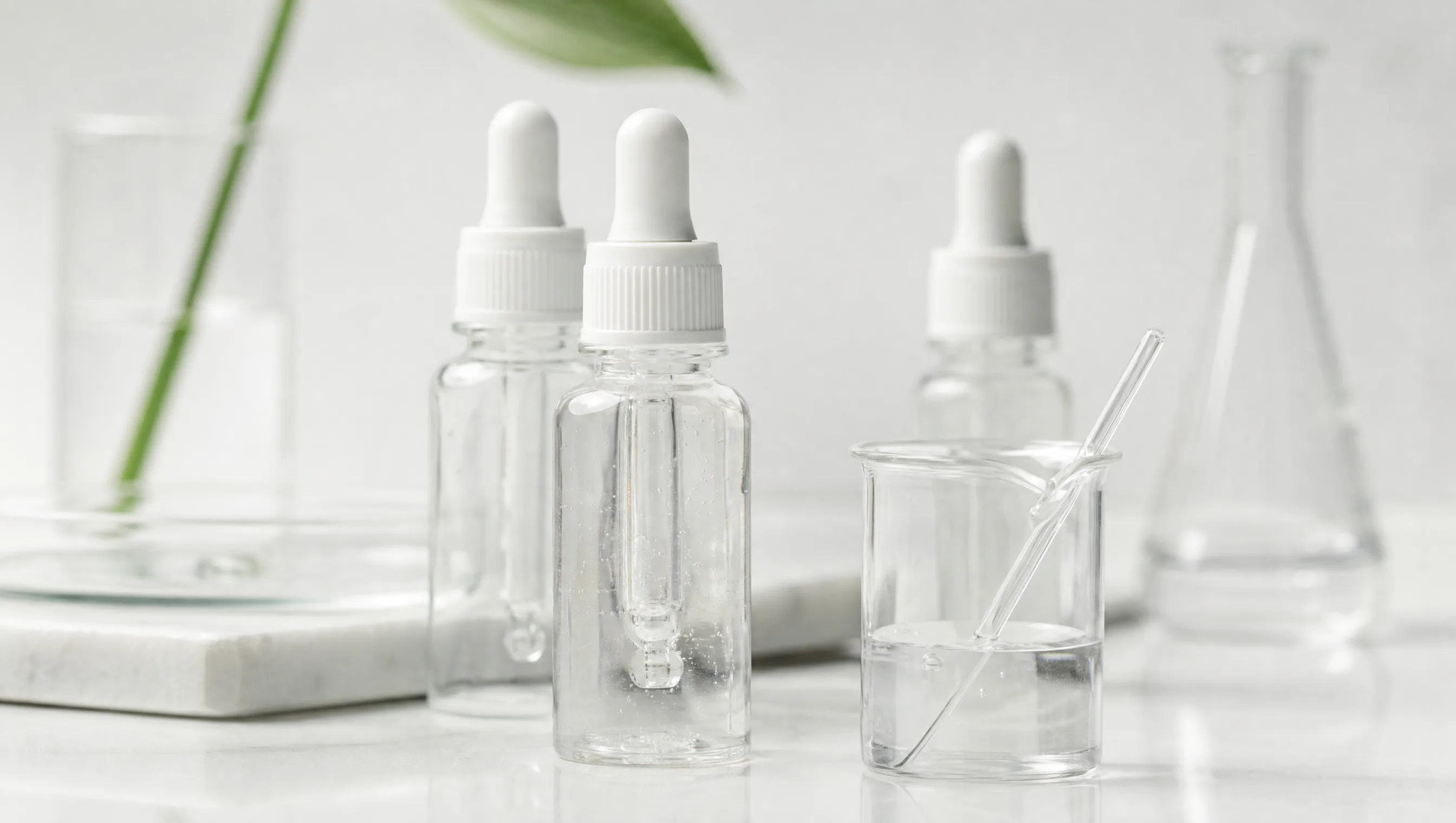
Two products can list the same active at the same percentage and behave nothing alike — one genuinely does something, the other sits in the cabinet doing very little. It’s tempting to write that off as placebo, or a fluke of individual skin. Often, it isn’t. It’s formulation.
An ingredient list tells you what went into the jar. It says almost nothing about what actually reaches skin in a usable form — and the gap between those two things is where a lot of disappointing purchases happen.
The ingredient isn’t the product
“10% vitamin C” on a label is a starting point, not a promise. The same ingredient can arrive stable or already degraded, freely available or chemically locked away, genuinely penetrating or sitting inert on the surface — and everything about that depends on what surrounds it in the formula.
A useful way to think about it: the ingredient is the passenger, the formulation is the vehicle. The same passenger has a very different journey depending on whether they’re in something roadworthy or something that breaks down before it leaves the driveway.
pH: the part nobody puts on the front of the bottle
Plenty of active ingredients only work — or only work well — within a narrow pH range, and getting that wrong quietly undermines everything else about the formula.
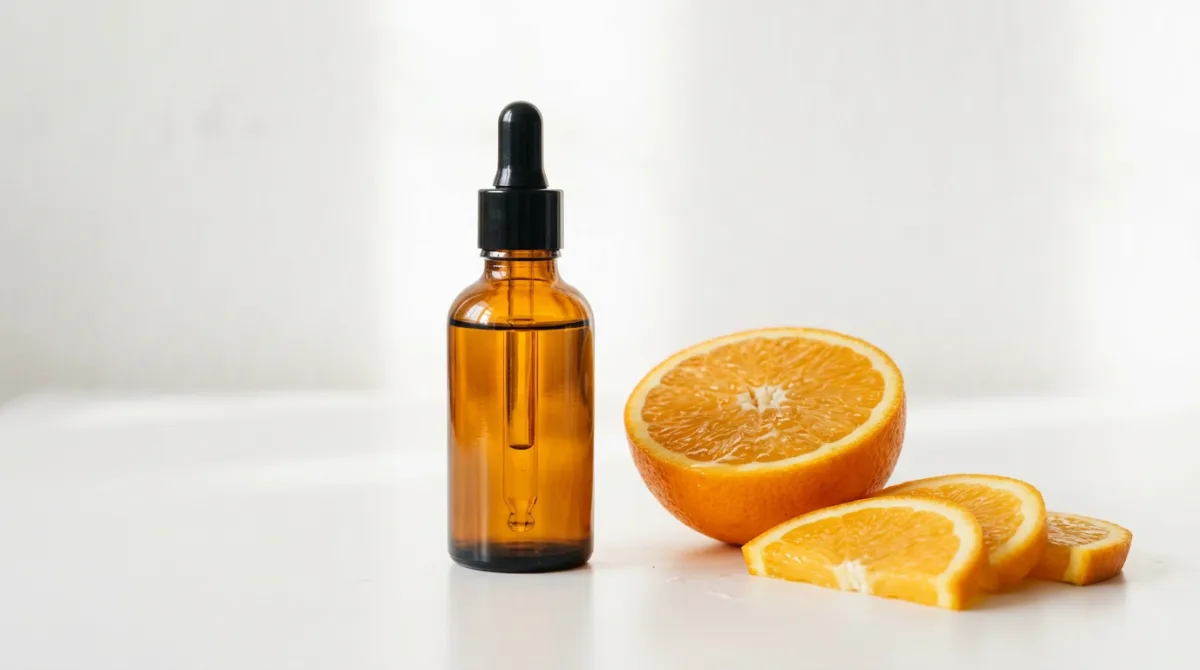
Ascorbic acid (pure vitamin C) is the clearest case. It generally needs a pH below about 3.5 to stay stable and penetrate effectively; at higher pH it oxidises faster, visibly shifting from clear to yellow to brown, and loses much of its ability to cross the stratum corneum. That’s part of why well-formulated vitamin C serums tend to sit around pH 2.5–3.0, and part of why some cheaper ones underperform — sometimes through under-investment in formulation, sometimes because a lower pH can feel more irritating and generates complaints, so brands quietly compromise upward.
AHAs follow a related logic. Above roughly pH 4, glycolic acid becomes increasingly ionised and its ability to penetrate drops; what matters is the “free acid” value — the proportion actually available in un-ionised, active form — not just the percentage on the label. A 10% glycolic acid at pH 4 can deliver meaningfully less active acid than the same percentage at pH 3. For more on how pH governs which actives can even be combined, see the pH rules.
Stability: degradation you often can’t see
Some ingredients are inherently unstable — they oxidise, break down, or convert to inactive forms on exposure to air, light, heat, or simply time. Retinol degrades with light and oxygen. Ascorbic acid oxidises readily. Some peptides break down in water over time.
Formulators address this through a handful of levers: airless pumps and opaque packaging that limit oxygen and light exposure (aluminium tubes generally outperform open jars); antioxidant systems — adding vitamin E or ferulic acid to a vitamin C formula isn’t only about extra benefit, it also stabilises the ascorbic acid itself; anhydrous, water-free bases for ingredients whose degradation pathways need water; and ongoing pH buffering through the product’s shelf life, not just at the point of manufacture. For more on why some actives fall apart faster than others, see the stability problem.
If an unstable active sits in a clear glass jar you dip fingers into daily, the formulation has already failed on some level — whatever percentage is printed on the front.
The vehicle effect
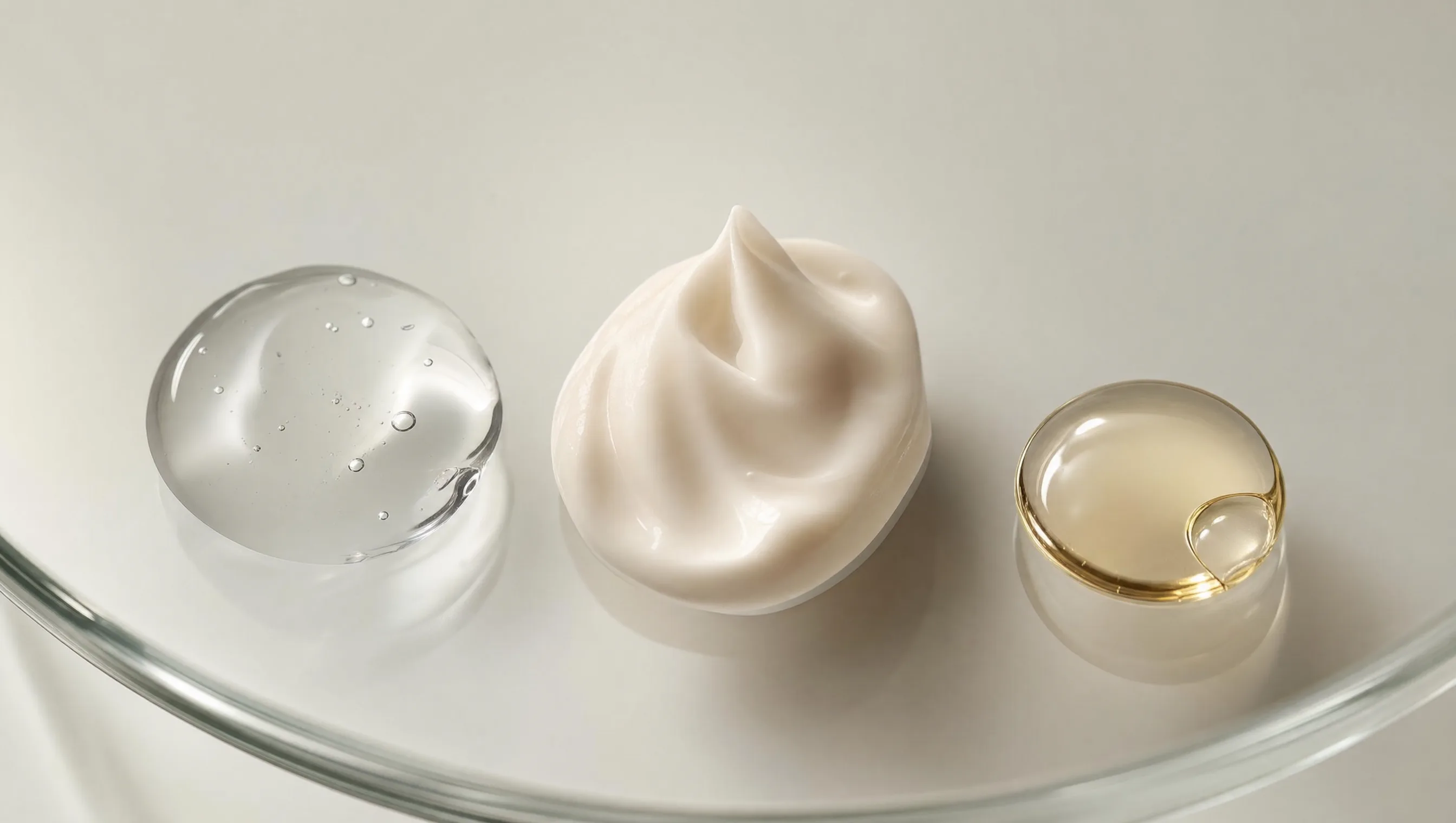
The base formula — the “vehicle” — shapes how an ingredient behaves on skin. Water-based serums are light and fast-absorbing but aren’t always ideal for lipophilic ingredients that need a fatty environment to penetrate well. Anhydrous, water-free serums can suit retinoids and vitamin E better, keeping them stable while providing a lipid-rich environment closer to skin’s own barrier lipids. Emulsions — creams and lotions — combine water and oil phases and can carry both types of active, but need careful formulation to keep each ingredient in the right phase and genuinely available for penetration. Occlusive bases can increase penetration of some actives simply by trapping moisture against skin and making the stratum corneum more permeable.
None of this means one texture beats another universally. A retinol in a featherlight serum might feel nicer than one in a heavier cream — but if the cream is actually delivering more retinol into skin, “nicer to use” and “more effective” aren’t the same question.
Penetration enhancement
Beyond passive formulation choices, some ingredients actively help others cross the barrier. Alcohols like ethanol and propylene glycol temporarily loosen the lipid barrier and increase permeability — part of why some clinical-strength vitamin C serums contain alcohol not as filler but as a functional enhancer, with the trade-off being potential irritation if overused. Fatty acids such as oleic acid enhance penetration of lipophilic ingredients, which is one reason certain facial oils do more than moisturise. Encapsulation technologies — liposomes, nanoparticles, cyclodextrins — can ferry actives through the barrier using structures skin tolerates more readily. DMSO and similar compounds are powerful enhancers used in pharmaceutical settings but rarely in cosmetics, largely because they enhance penetration of everything applied alongside them, not selectively.
The gap between a clinical-strength vitamin C that visibly works and a department-store one that doesn’t can come down almost entirely to penetration enhancement — at identical label percentages. Molecule size plays a role here too; see the 500-dalton rule for why some actives are limited in how far they can get regardless of formulation, and transdermal vs topical for the broader question of how deep “penetration” actually needs to go to matter.
Concentration versus delivery
Here’s the counterintuitive bit: a higher percentage on the label doesn’t automatically mean more reaches skin. If only 1% of a 10% vitamin C formula actually penetrates, that’s 0.1% delivered. If 10% of a 5% formula penetrates, that’s 0.5% — five times more, from the lower-percentage product. This is why a well-formulated moderate-concentration product can genuinely outperform a poorly formulated high-concentration one. The label percentage is the ingredient’s potential; formulation decides how much of that potential is actually realised.
Release timing
Immediate delivery isn’t always the goal. For some actives, controlled release over time produces better results with less downside than delivering everything at once. Retinoids illustrate this well — a large immediate dose can overwhelm skin and cause irritation without a proportional gain in benefit, whereas time-release technologies that deliver retinol more gradually can achieve comparable results with less disruption. Two products with an identical ingredient list can have very different release profiles, and the label won’t tell you which you’re holding.
Reading the signals without a lab
Consumers can’t run stability testing at home, but a few signals help. Packaging that suggests the formulator understood the ingredient — airless pumps, opaque containers, tubes rather than clear jars for anything light- or oxygen-sensitive. Brands willing to publish the pH of a pH-dependent active are usually confident it’s correct; silence on that point, for an ingredient where it matters, is worth noting. Texture that roughly matches the ingredient claims — a vitamin C serum that feels like plain water probably mostly is. And price is a rough, imperfect signal: penetration enhancers, encapsulation technology, and proper packaging cost money, so suspiciously cheap often means something was cut, though expensive is obviously no guarantee either.
The uncomfortable part
Most skincare products aren’t optimised purely for efficacy — they’re optimised for texture, fragrance, shelf appeal, and cost, because that’s what sells. That isn’t necessarily cynical: a technically flawless formulation that feels unpleasant and looks unappealing on a shelf will still fail commercially, whatever the data says.
What it means practically is that an ingredient list is the beginning of the story, not the end of it. pH, stability systems, vehicle choice, penetration enhancement, and release timing — none of it visible on the front of the label — decide whether an impressive ingredient list translates into an impressive result. That’s also why comparing two products purely on the format they’re delivered in matters; see the serums, creams and oils breakdown for how much texture alone changes outcomes.
This doesn’t hand you laboratory analysis. But it should stop the assumption that ingredient name plus percentage equals predictable outcome — an assumption that quietly explains a lot of the product-hopping people do without ever working out why one thing worked and the near-identical one didn’t.