The Stability Problem: How to Know If Your Product Has Gone Off
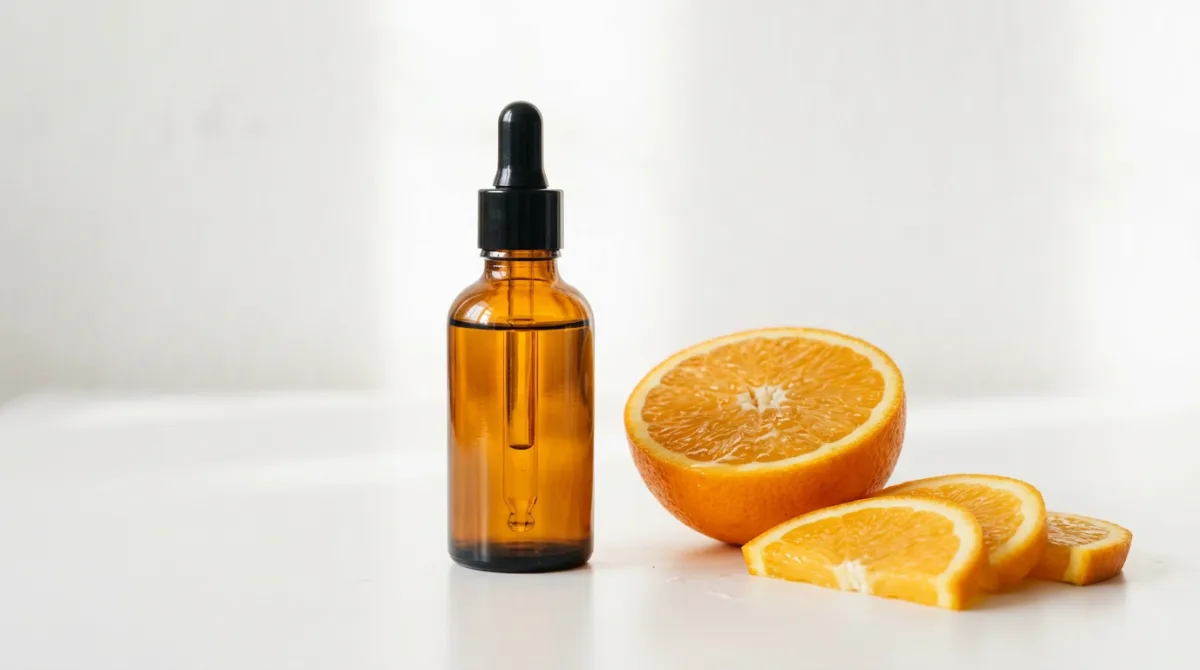
A vitamin C serum that's oxidised still looks like a vitamin C serum. Degradation in skincare is mostly invisible, which means the product doing nothing useful in your cabinet might still look perfectly fine.
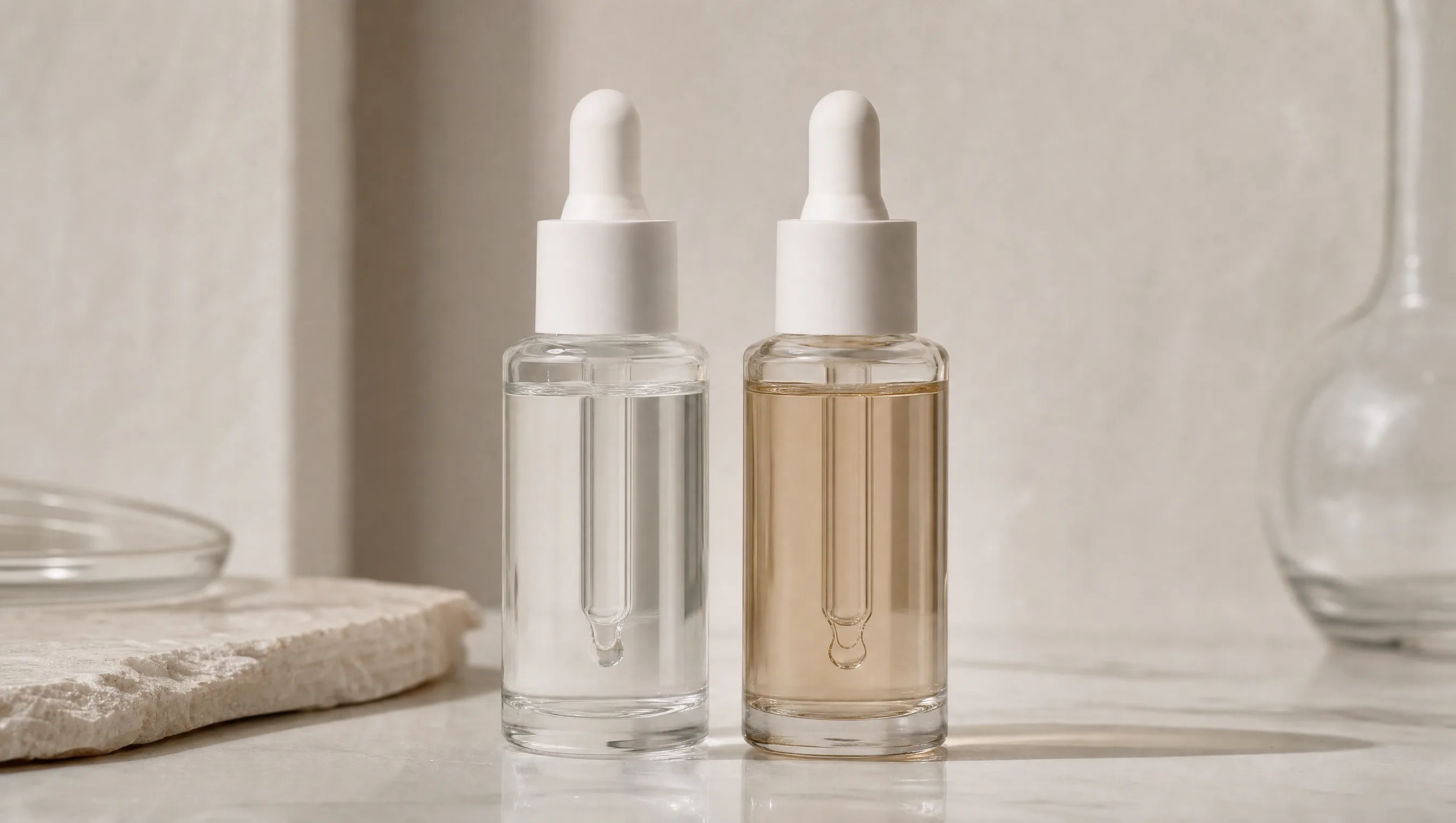
You wouldn’t drink milk a month past its date. Yet plenty of people use skincare months or years after it’s quietly degraded, on the reasonable-seeming assumption that if it still smells and looks the same, it’s still working. The problem is that degradation in skincare is often invisible for a long time before it becomes obvious — and a product that looks entirely fine might be doing close to nothing.
Why stability is a real concern, not a technicality
Active ingredients don’t last forever. From the moment a product is manufactured, chemical processes start breaking down its key components, driven by heat, light, air and time. A vitamin C serum that tested at 15% concentration when bottled might be down to 8% after six months and 2% after a year — and it’ll still look, smell and feel like the same product throughout. Stability isn’t primarily a safety issue, though that can factor in; it’s an efficacy one. An unstable product is money spent on benefits you’re no longer receiving, whether or not anything looks wrong.
The ingredients that degrade fastest
Some actives are considerably more fragile than others, and it’s worth knowing which.
Vitamin C (L-ascorbic acid) is the classic case. It oxidises on exposure to air, light and heat, and once oxidised it doesn’t just stop working — there’s some evidence it can turn pro-oxidant, working against the skin rather than for it. The tell is colour: a shift from clear or pale toward yellow, then orange, then brown signals oxidation has started. Poorly formulated or stored products can begin degrading within weeks of opening; well-formulated ones in proper packaging might hold up for three to six months.
Retinoids are sensitive to light and air, though somewhat more stable than vitamin C, degrading through oxidation and photolysis — breakdown from light exposure. Colour change, an odd smell or separation can signal degradation, but retinoids can also lose significant potency with no obvious visual cue at all, which makes them harder to judge by eye. Typically stable for six to twelve months after opening in proper packaging; clear bottles or droppers speed that timeline up.
Benzoyl peroxide loses potency over time — often around half its strength within a year, even unopened — usually without visible signs, which makes it one of the harder ingredients to self-monitor. Best used within six to twelve months of purchase.
Vitamin E (tocopherol) is relatively stable on its own but can oxidise, particularly when it’s been doing its job as a stabiliser alongside vitamin C — once it’s spent that way, it’s depleted rather than protective. A rancid smell, especially in oil-based products, is the giveaway.
Peptides are generally stable in aqueous formulations, though acidic conditions or certain other ingredients can degrade them, usually with no visible sign at all — making them the hardest category here to judge by anything other than trusting the stated period after opening.
What accelerates the process
Light is a major factor for photosensitive actives — UV and even visible light can trigger degradation, which is why packaging matters more than it might seem. Clear glass or plastic offers little protection; coloured glass is better but not complete; opaque packaging is best. A vitamin C serum left in a clear bottle by a sunny window is degrading faster than the label’s shelf-life claim assumes.
Air drives oxidation, and every time a product is opened, fresh air gets in. Dropper bottles are the worst offenders here, pulling air in with every use; open jars expose the surface constantly; tubes are better, since product isn’t re-exposed once dispensed; airless pumps are best, dispensing without drawing air back in at all.
Heat speeds up the chemical reactions behind degradation generally — a hot, humid bathroom near a shower is a worse storage spot than it feels like, refrigeration can meaningfully extend life for temperature-sensitive actives like vitamin C, and products shipped or left in hot cars may already have degraded before they even reach you.
Time matters even under ideal storage, since the shelf-life clock starts at manufacture, not at purchase. Stock that’s sat in a warehouse for months before reaching a shelf has already used up part of its stable life before you ever open it.
How to actually assess what you own
A colour shift compared with how the product looked when new is the most reliable visual sign, particularly for antioxidant products. Separation — a watery layer sitting on top of a thicker one — means an emulsion has destabilised; shaking might temporarily recombine it, but the underlying integrity is compromised regardless. A thickened, thinned or grainy texture indicates chemical change, and a film or skin on the surface of a cream suggests evaporation and possible oxidation of that surface layer.
Smell tells you things sight doesn’t. A rancid smell in an oil — often described as crayons, paint or old nuts — signals it’s gone off. Any smell noticeably different from when the product was new is worth taking as a warning rather than dismissing. If a scented product has gone unscented, the fragrance components have likely degraded, and the actives may well have followed.
Efficacy is the hardest to judge but sometimes the clearest signal in hindsight: a vitamin C serum that used to cause a slight tingle and no longer does may have oxidised; an AHA product that used to visibly exfoliate and now seems mild may have degraded, or its pH may have drifted; a product that simply stops delivering results with no change to the rest of your routine is worth suspecting on those grounds alone.
Packaging worth prioritising
For unstable actives, airless pumps are close to the gold standard, particularly for vitamin C and retinoids, since they prevent air reaching the product at all. Opaque containers and metal tubes protect against light and, in the tube’s case, air too. Individual sachets protect each dose until use, though they’re a harder sell environmentally. What’s worth avoiding: clear or light-coloured containers for light-sensitive actives, dropper bottles for anything oxidation-prone, and wide-mouth jars for unstable actives generally — all three trade a nicer unboxing moment for a shorter useful life.
Storage habits that actually help
Room temperature, around 20°C, is fine for most products, and a cool, dark cabinet beats a bathroom shelf for anything sensitive. Refrigeration genuinely helps vitamin C specifically, since cold slows oxidation. Bathroom storage near a shower adds heat and humidity that accelerate degradation for sensitive formulas, closing products promptly rather than leaving them open through a routine helps marginally, and decanting into different containers is worth avoiding — it introduces both fresh air and a contamination risk for no real benefit.
Manufacture dates matter more than purchase dates
Products are at their most potent immediately after manufacture, and by the time they reach you they may already be months, sometimes close to a year, past that point. Some brands print batch codes that can be decoded to find the manufacture date. This is particularly worth checking for products on sale, which may be older stock moving before it expires, and for anything from resellers, grey-market sources or long-shipping-time overseas retailers, where the gap between manufacture and purchase tends to be largest.
Signs it’s time to let go of a product
Discard when there’s a clear colour, smell or texture change; when a product has meaningfully exceeded its period-after-opening symbol; when it’s been stored somewhere hot or bright for an extended stretch; when it’s stopped producing the results it used to; or, more simply, when you genuinely can’t remember buying it — at that point, age alone is a reasonable enough reason.
Formulation quality changes the whole equation
Well-formulated products hold up longer, and it’s part of a broader pattern worth understanding — see our piece on why formulation changes ingredient results for how the same active can perform very differently depending on how it’s built. Formulators have real tools for this: more stable vitamin C derivatives (ascorbyl tetraisopalmitate, for instance, over plain L-ascorbic acid), added antioxidants like vitamin E and ferulic acid to protect vitamin C specifically, pH adjusted into an optimal stability range, chelating agents to block metal-ion-catalysed degradation, and a well-chosen preservative system. A cheap vitamin C serum in a clear dropper bottle will degrade faster than a well-formulated one in airless packaging, even starting from an identical concentration — packaging and formulation quality aren’t cosmetic details here, they’re the difference between a product that lasts and one that doesn’t.
Common questions
Can I tell a product has degraded just by using my PAO symbol? Not reliably on its own — the PAO is a general guideline assuming decent storage, but heat, light and air exposure can shorten real-world stability well below it.
Is it safe to keep using a product that’s changed colour but not smell? Safety-wise, usually yes for most cosmetics, but efficacy-wise it’s a clear sign the active ingredient has likely degraded — you’re probably applying something closer to a plain moisturiser than the treatment you bought.
Does refrigerating a product always help? It helps oxidation-prone actives like vitamin C specifically. For most other products it’s not necessary, and for some formulations (certain emulsions) very cold storage can actually destabilise the texture.
Practical takeaways
Buy unstable-ingredient products in packaging built to protect them — an airless pump over a pretty glass dropper. Store what you own cool, dark and closed rather than on an open bathroom shelf. Use products within their effective window rather than stockpiling more than you’ll get through. Watch for colour, smell and texture changes as your early warning system. And keep in mind that efficacy tends to fade before a product looks obviously “bad” — a vitamin C serum can be largely spent while still looking, on the shelf, exactly like it did the day you bought it.