Why Serums, Creams, and Oils Perform Differently
A serum, a cream and an oil containing the same active aren't the same product wearing different textures — they deliver different amounts, to different depths, on different timelines. The format is doing more work than the ingredient list lets on.
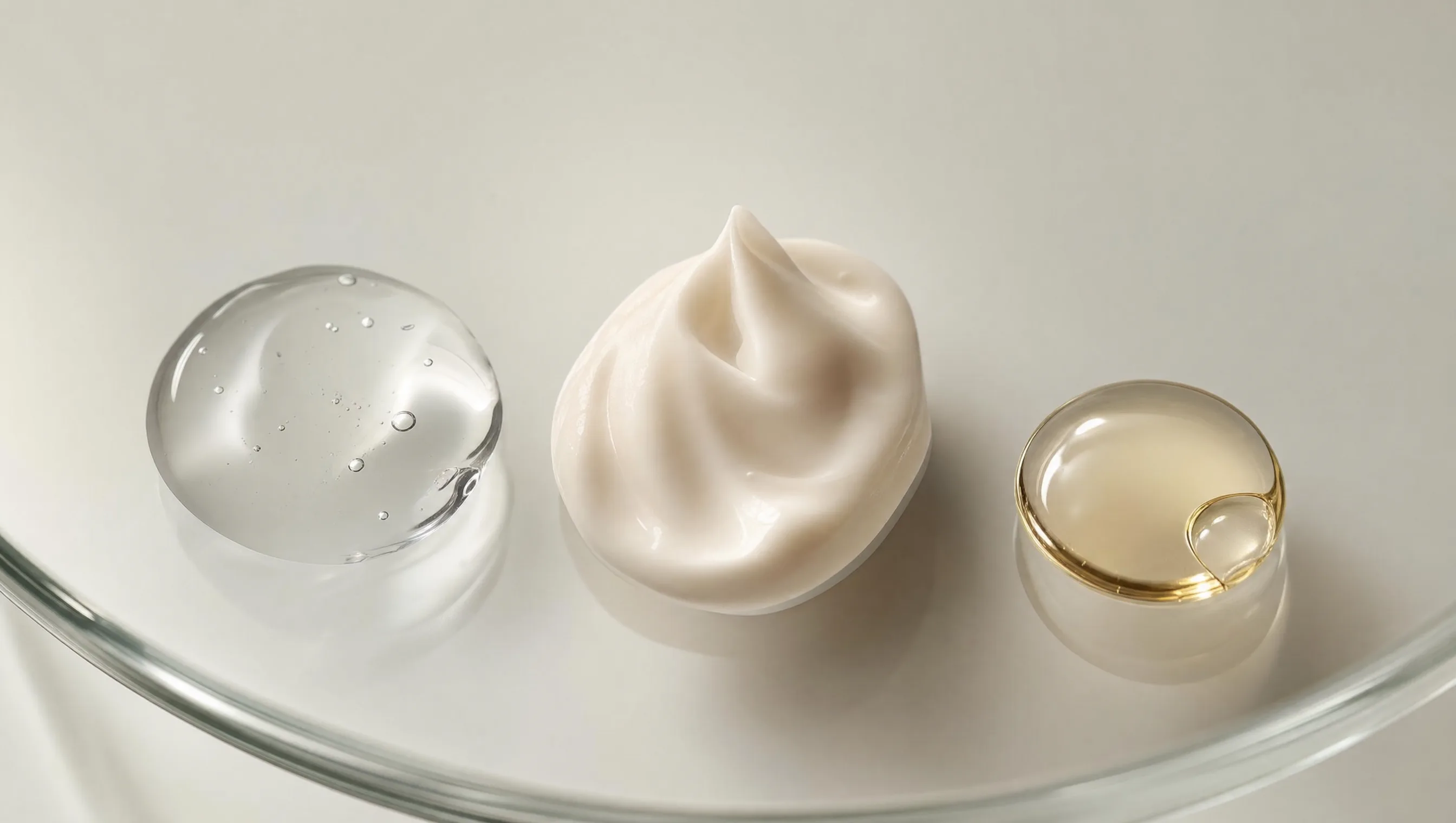
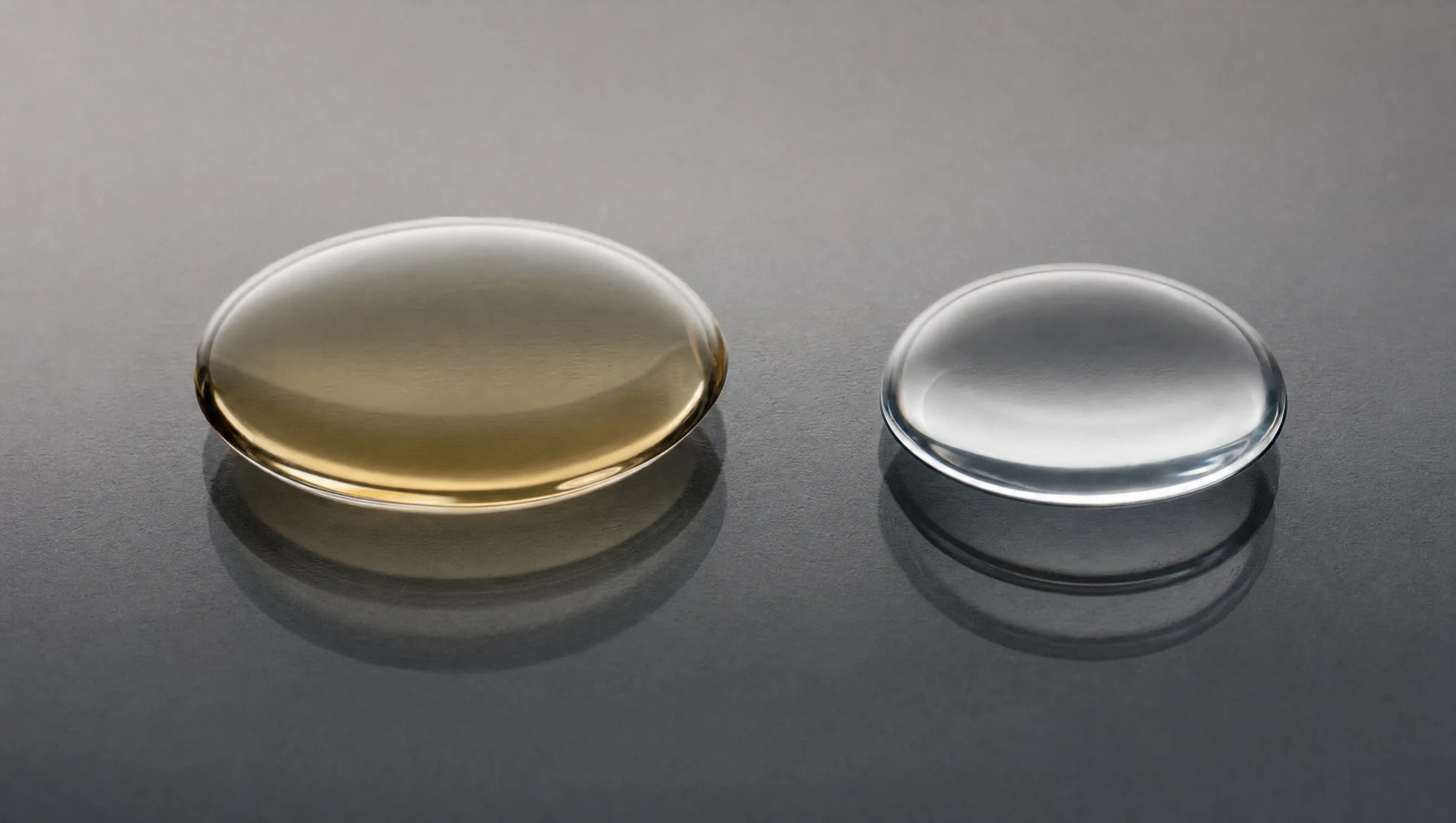
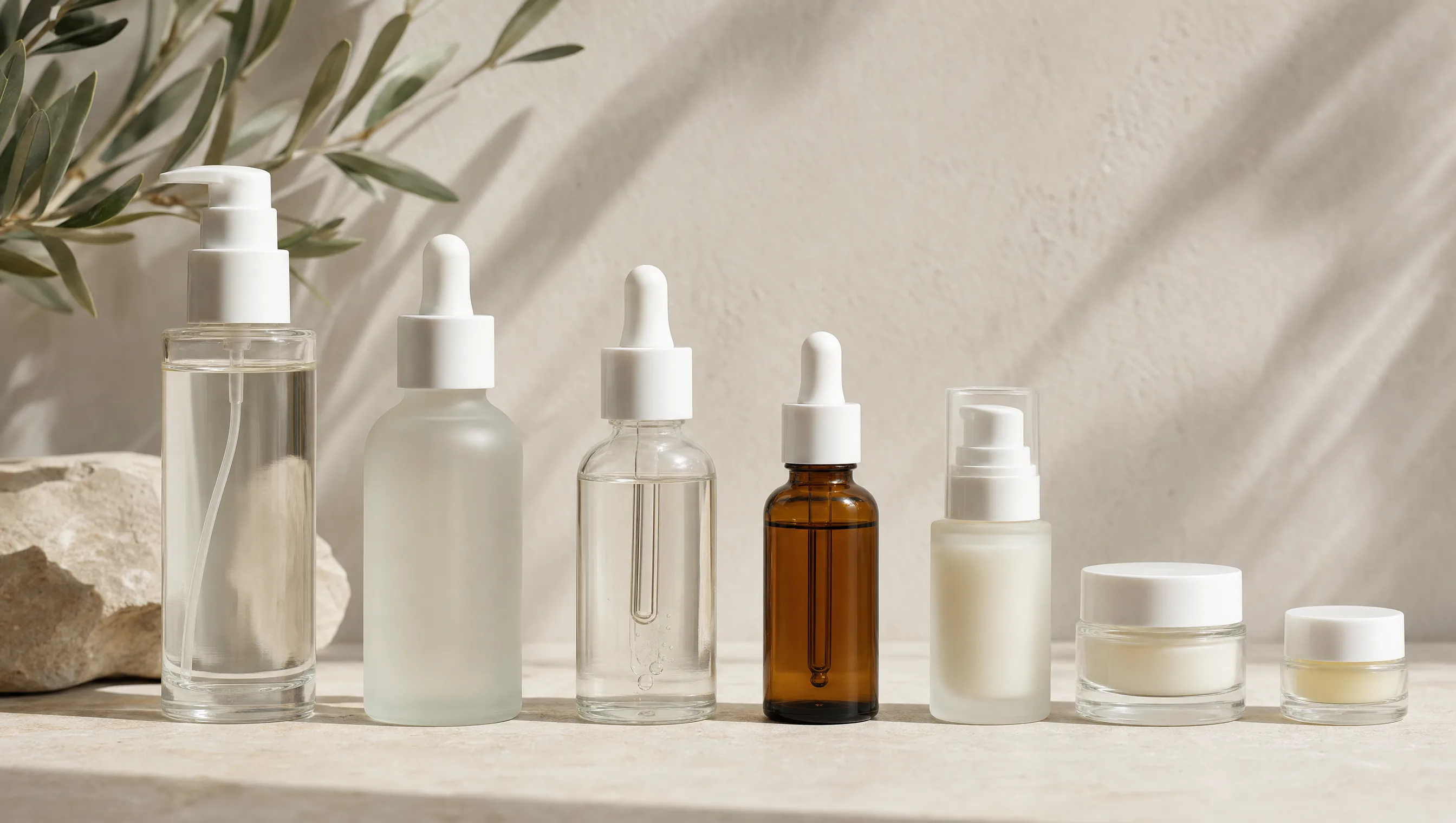
A 10% vitamin C serum and a moisturiser boasting “with vitamin C” are not doing the same job, even when both are technically telling the truth about what’s inside. Format — watery serum, rich cream, pure oil, gel, balm — isn’t packaging preference. It changes how much of an active actually reaches skin, by what route, and on what timeline. Two products with an identical ingredient on the label can behave nothing alike once format enters the picture.
What each format is actually built to do
Serums are usually water-based, formulated to carry a high concentration of a targeted active with minimal occlusive or moisturising bulk. They’re built to deliver, not to moisturise — lightweight, fast-absorbing, and designed to sit under other products. They tend to be the best vehicle for water-soluble actives like vitamin C, hyaluronic acid, or niacinamide at concentrations higher than a cream would typically carry.
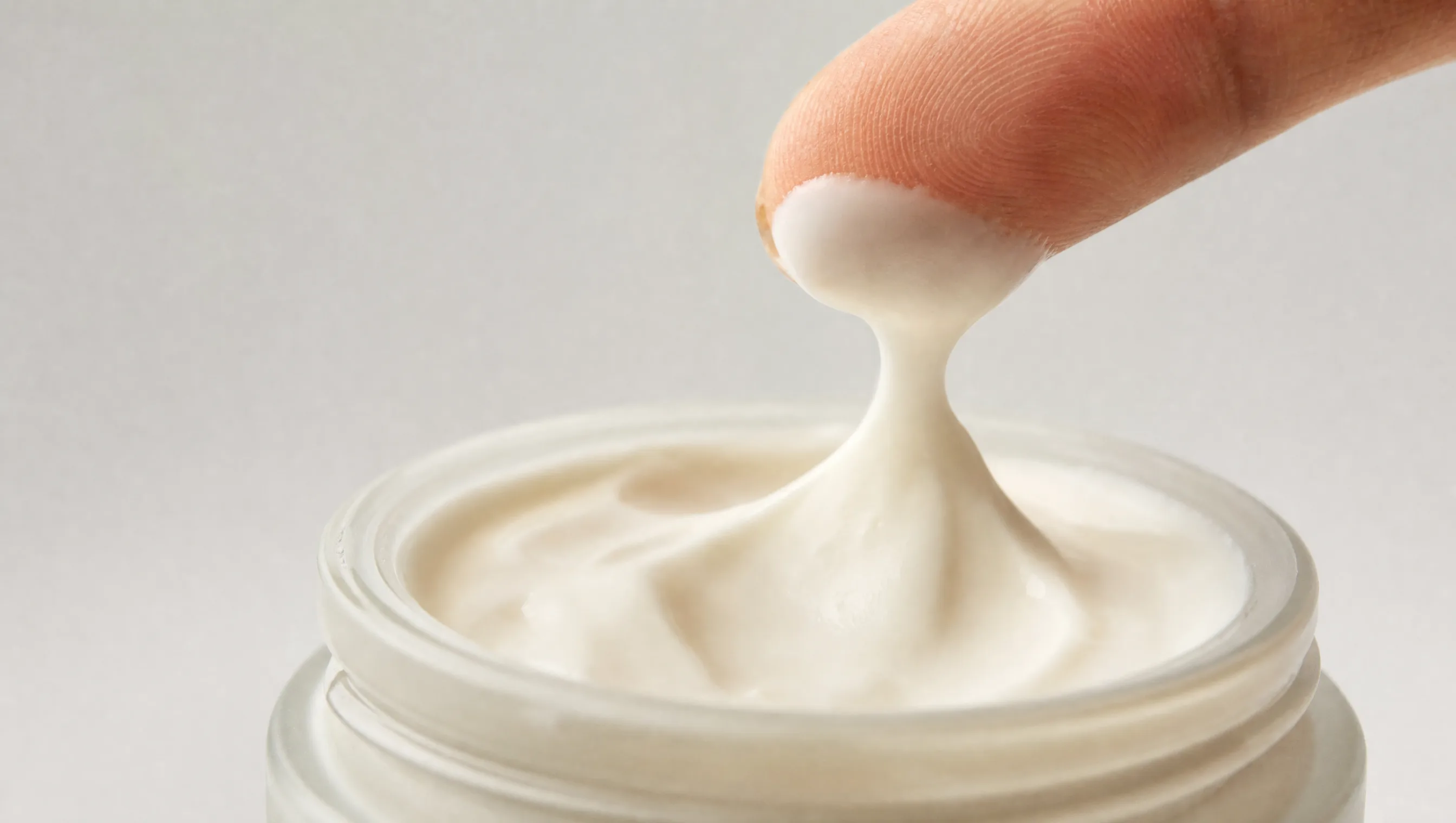
Creams and lotions are emulsions — water and oil phases held together by emulsifiers, with creams thicker and oilier, lotions lighter and more water-heavy. They can carry both water-soluble and oil-soluble ingredients and tend to feel more complete as standalone products, though they generally don’t layer as cleanly as a serum underneath other steps. They’re the workhorse for general moisturising and moderate-concentration actives.
Oils contain no water phase at all, so they can only carry oil-soluble ingredients — retinol, vitamin E, and similar. They’re highly occlusive, creating a surface barrier, and don’t themselves provide water-based hydration. A pure oil listing niacinamide on the label is a formulation red flag: niacinamide doesn’t dissolve in oil, so it isn’t being delivered in any meaningful way from that base.
Gels are water-based but thickened with gelling agents rather than emulsifiers, carrying little to no oil. Lightweight, often cooling, quick to absorb, and generally the better call for oily or acne-prone skin that reacts badly to occlusion.
Balms sit at the heavy end — high oil or wax content, minimal water, thicker than an oil. Very occlusive, slower to absorb, sometimes leaving residue, but genuinely useful for overnight barrier repair on very dry or compromised skin.
Why format decides the penetration route
Aqueous serums and gels rely on an ingredient being able to move in its water-dissolved form, which suits small, well-balanced molecules but works poorly for anything strongly lipophilic. Hyaluronic acid is a good illustration: larger molecular weights largely sit on the surface providing hydration rather than penetrating, while smaller weights get somewhat deeper but still mostly act within the stratum corneum.
Oils and anhydrous serums, by contrast, tend to suit lipophilic ingredients better — retinol appears to penetrate more effectively from an oil base than a water base, because it can dissolve directly into the lipid matrix of the stratum corneum rather than needing to cross it from an aqueous environment.
Emulsions split the difference, carrying both ingredient types because they contain both phases — but usually at somewhat lower concentrations of each than a targeted serum would use, and with a slower release, since actives have to partition out of the cream matrix before they can reach skin at all.
Concentration is part of the format story
Format tends to dictate the concentration an active is even formulated at. Serums are typically pushed higher — commonly 10–20% vitamin C, 5–10% niacinamide — because they’re small-volume products built around potency. Creams usually sit lower, often 1–5% of most actives, because the formula also has to balance moisturising function, stability, texture and cost across a larger volume. Oils vary the most: some are effectively a single ingredient (100% squalane), while oil serums might carry 1–5% of a specific oil-soluble active. This is a large part of why a 15% vitamin C serum will generally outperform a 2% vitamin C moisturiser for vitamin C-specific benefits — not because the moisturiser is badly made, but because it was never trying to be a delivery vehicle at that concentration.
Layering follows format, not habit
The general rule is watery to oily, permeable to occlusive. Aqueous serums absorb with little residue and go first, so later products can still penetrate. Light gels and lotions follow without issue. Heavier creams absorb more slowly and start to occlude, so they go after serums but before any oil. Oils and balms form a barrier that blocks absorption of anything applied on top, which is why they go last — apply an oil before a serum and the serum ends up sitting on the oil rather than reaching skin. For the fuller sequence across a routine, see the layering guide.
Occlusion: useful, situational, not universal
Occlusion — creating a barrier that reduces water loss — is largely a property of oil-rich formats: petroleum jelly, balms, heavy oils and water-in-oil emulsions sit at the high end; creams and silicone-based products moderate; serums, gels and toners provide little to none. It has real value for hydration and barrier repair, and can even enhance penetration of some actives by increasing stratum corneum hydration. It also has real downsides for some skin types — it can feel heavy, contribute to congestion in acne-prone skin, and limit beneficial air exposure. The right amount depends on skin type and climate, not a universal “more is better” rule.
Stability varies by format too
L-ascorbic acid is notoriously unstable and degrades faster in aqueous formulations than anhydrous ones, which is why some vitamin C products lean on oil-soluble derivatives or water-free bases instead — see the stability problem for more on why. Retinoids are sensitive to light and oxygen but reasonably stable in both oil and emulsion bases when properly protected. Peptides tend to hold up well in aqueous formulations but can degrade in very acidic ones. Format choice isn’t only about how a product feels — it affects whether the active is even still active by the time it’s used.
When format matters more than the ingredient list
A well-formulated product in an appropriate format can genuinely outperform a poorly formulated one with a headline ingredient at a “better” percentage. A 10% vitamin C serum in a properly stabilised aqueous base at the correct pH will likely outperform a 20% vitamin C cream where the vitamin C has already oxidised from poor formulation. A retinol oil delivering 0.5% retinol effectively will likely outperform a retinol serum where the retinol isn’t properly solubilised or protected. Format doesn’t replace the ingredient — it decides how much of that ingredient’s potential is actually realised.
Matching format to purpose
For targeted treatment of a specific concern — pigmentation, fine lines, hydration — serums tend to deliver actives most efficiently. For daily maintenance, creams and lotions offer balanced hydration alongside moderate active delivery; they’re better at sustaining a result than driving one. For barrier support, oils and balms bring occlusion and lipophilic repair ingredients, best suited to damaged barriers or very dry skin. Oily skin tends to do better with gels and lighter serums that skip the pore-congesting occlusion; drier skin generally needs the emollient content a cream or oil provides.
A typical multi-format routine runs roughly: cleanser, aqueous toner or essence, a treatment serum matched to the active, a cream or gel moisturiser suited to skin type, an oil or balm where extra barrier support is needed, and sunscreen last (see UVA vs UVB for why that step shouldn’t be skipped). Each format is doing a distinct job — dropping one doesn’t matter much for some skin types and leaves a real gap for others.
Common questions
Is a serum always more effective than a cream with the same ingredient? Usually for that specific active, because serums are formulated at higher concentrations — but a cream still adds moisturising and occlusive benefits a serum doesn’t.
Can a facial oil deliver water-soluble actives like niacinamide? No — oil-soluble and water-soluble ingredients need matched vehicles. A pure oil listing a water-soluble active isn’t delivering it meaningfully.
Does a more expensive product always use a better format? Not necessarily. Price tracks formulation investment loosely at best — a well-made £15 serum can outperform a poorly formulated £50 cream carrying the same active at a lower effective concentration.
Where that leaves you
Format isn’t cosmetic packaging around an ingredient — it’s part of the mechanism. Match water-soluble actives to aqueous bases, oil-soluble actives to oil bases, and expect emulsions to do a bit of both at typically lower individual concentrations. Layer in the right order, from watery to occlusive. And when comparing two products with the same star ingredient, ask what format it’s actually delivered in before assuming the higher percentage — or the higher price — wins.