The Ingredients That Actually Repair Your Skin Barrier
Every moisturiser claims to "restore" or "strengthen" the barrier. Barrier repair is actually one of the few skincare claims with genuinely clear evidence behind it — but the evidence points to a specific combination, not a vague botanical blend.
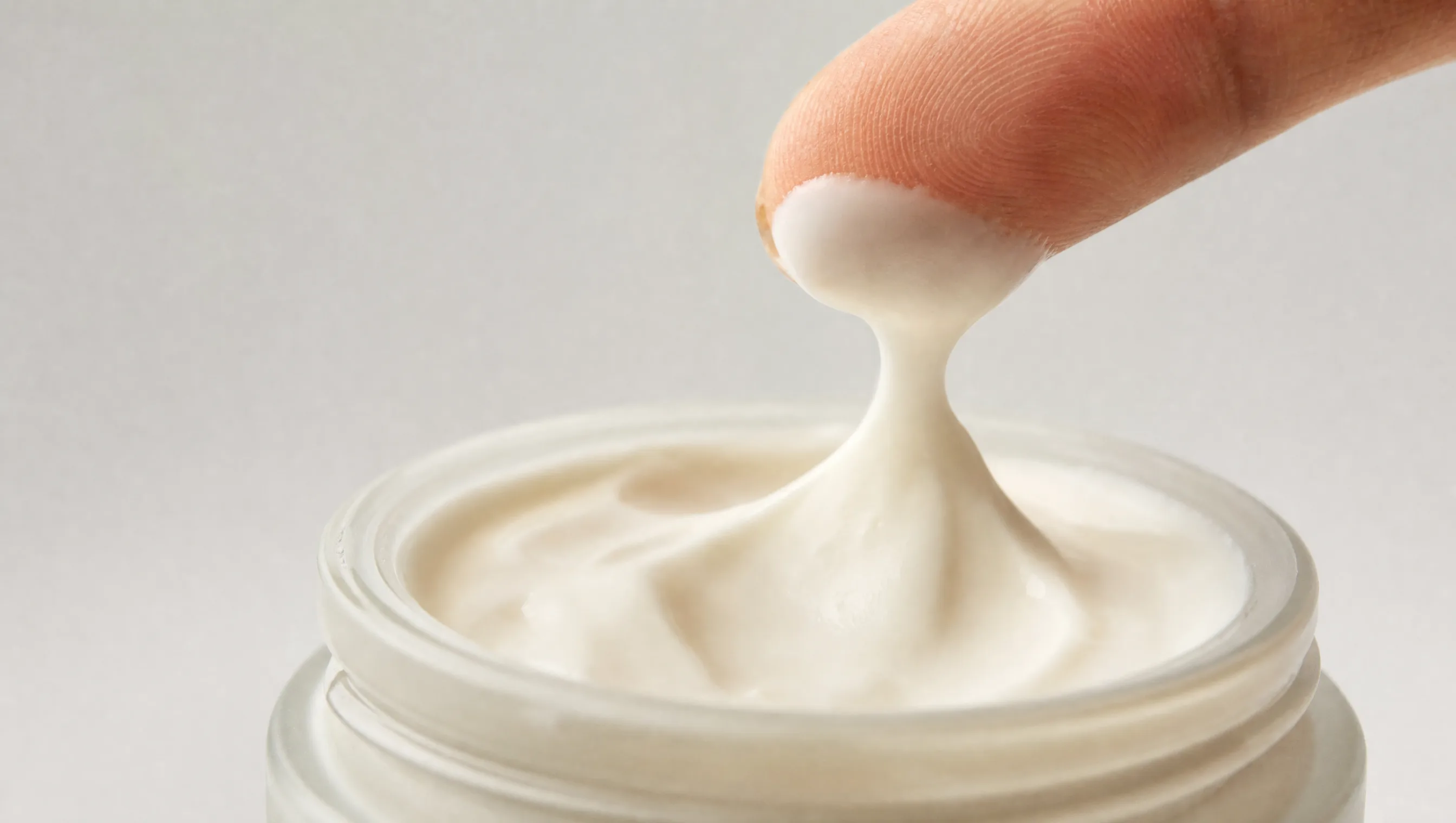
“Barrier repair” is close to a universal claim in skincare marketing — nearly every moisturiser makes some version of it. That’s unusual, because most skincare claims are vague on purpose; this is one of the few where the underlying science is specific enough that you can actually check a product against it. We know the barrier’s structure well, we know what tends to deplete it, and we know which ingredients genuinely support rebuilding it. Here’s what holds up.
What “repair” actually means
If you haven’t already, how skincare gets through the barrier and how to recognise barrier damage are useful context for this one. In short: the stratum corneum’s brick-and-mortar structure pairs dead skin cells (corneocytes) with a lipid mortar made of roughly 50% ceramides, 25% cholesterol, and 10–20% free fatty acids, plus smaller amounts of other lipids. That ratio isn’t incidental — when any one component is depleted or the balance is off, barrier function suffers, alongside the physical gaps, altered pH and inflammation that tend to come with it.
Genuine repair addresses that structure. A lot of marketed “repair” products just mask symptoms temporarily with occlusion or hydration, without restoring the lipid composition that’s actually missing.
The three lipids that matter, briefly
Research going back to the 1990s established that effective repair needs all three major lipid types present together, not any one in isolation.
Ceramides are the largest single component of the lipid matrix and the one most people have heard of — that article covers the different types, what to look for on a label, and the evidence in more depth than makes sense to repeat here.
Cholesterol is the quieter, more overlooked piece. It modulates how the lipid matrix organises itself, helping ceramides and fatty acids pack together into the lamellar structures that mirror natural skin. Studies applying ceramides without cholesterol consistently show weaker repair than formulas containing both — cholesterol is genuinely doing structural work, not just filling out an ingredient list.
Free fatty acids — particularly palmitic, stearic and linoleic acid — complete the trio. Like cholesterol, they’re necessary for proper lamellar structure, and linoleic acid deficiency specifically has been linked to barrier dysfunction. Sunflower oil is a notably rich source if you’re looking at oil-based formulations.
The ratio between the three appears to matter too: research broadly points to something close to the skin’s own composition — roughly ceramides 50%, cholesterol 25%, fatty acids 25% — as a reasonable target, with some evidence that slightly elevated ceramide ratios (around 3:1:1) may speed repair in damaged skin. The consistent finding across studies isn’t the exact ratio so much as the fact that ceramide-only products tend to underperform ones containing all three.
Niacinamide: supporting synthesis rather than replacing lipids
Unlike the lipids themselves, niacinamide works indirectly — it increases the skin’s own production of ceramides and fatty acids in the epidermis. Studies show improved barrier function, reduced TEWL, and increased stratum corneum thickness with regular topical use, alongside the reduced inflammation and improved tone niacinamide is more commonly known for. Most research uses 2–5%; higher concentrations exist but aren’t clearly more effective for barrier support specifically, and if your barrier is already significantly compromised, even niacinamide can cause initial irritation — start cautiously rather than assuming “gentle” means “safe at any strength” during active recovery.
Hyaluronic acid: hydration, not lipid replacement
Hyaluronic acid doesn’t repair the lipid barrier directly, but adequate water content is part of what lets barrier-repair enzymes function properly, so it plays a genuine supporting role. Standard high-molecular-weight hyaluronic acid sits at the surface and hydrates rather than penetrating — appropriate for barrier support. Low-molecular-weight versions can penetrate further but may irritate compromised skin, which makes them a less obvious choice during active recovery than the marketing sometimes implies.
Petrolatum: underrated and widely misunderstood
Petrolatum deserves a specific mention because it’s both one of the most effective ingredients here and one of the most dismissed. It reduces TEWL more effectively than any other cosmetic ingredient studied — commonly cited figures put it around 99%, against roughly 30% for many other occlusives — creating conditions that let the barrier heal without ongoing water loss. Studies comparing petrolatum occlusion against no occlusion show meaningfully faster recovery. There’s also some evidence it doesn’t just sit on the surface but partially integrates into the upper stratum corneum alongside existing lipids, which would explain why it outperforms simpler occlusives. This is, in effect, the science behind slugging.
The trade-off is cosmetic, not functional — petrolatum is heavy and unglamorous, which is presumably why so much marketing budget goes into ingredients that do less. Mineral oil, lanolin, shea butter and various plant oils provide occlusion too, just less effectively; none of them beat petrolatum on the numbers, but they’re easier to live with day to day.
Panthenol: a gentler supporting player
Panthenol (provitamin B5) converts to pantothenic acid in skin, where it improves stratum corneum hydration, reduces TEWL, and has anti-inflammatory effects that support healing generally. Typical concentrations run 1–5%, and it’s well tolerated even on compromised skin — a reasonable inclusion in a repair routine, if a supporting one rather than a central pillar.
What doesn’t repair the barrier, whatever the label implies
For balance: some frequently marketed “barrier repair” ingredients don’t actually supply structural barrier components. Aloe vera and centella asiatica are soothing and anti-inflammatory, which genuinely supports healing, but neither provides ceramides, cholesterol or fatty acids. Most plant extracts fall into the same category — pleasant, sometimes anti-inflammatory, not structural. That doesn’t make them useless, just supporting actors rather than the repair mechanism itself.
Building the routine
A cleanser that’s gentle, non-foaming and lipid-respecting — oil or cream-based rather than anything that lathers. A treatment step with niacinamide (2–5%, if tolerated) and hyaluronic acid for hydration. A barrier-repair moisturiser containing ceramides, cholesterol and fatty acids in a sensible ratio — this is the core of the routine, and the one product worth spending formulation attention on rather than price. An occlusive, ideally petrolatum-based, especially at night. Mineral sunscreen, since a damaged barrier is more vulnerable to UV. And nothing irritating — no acids, no retinoids, no fragrance, no essential oils — until recovery is genuinely complete, not just improved.
Timeline
The stratum corneum turns over roughly every 2–4 weeks, so meaningful improvement usually needs at least that long of consistent, appropriate care. More severe damage can take two to three months of repair-focused routine before skin is ready for actives again. Signs it’s working: reduced sensitivity, products no longer stinging, less dryness and flaking, better texture, and a growing tolerance for products that used to cause problems.
Common questions
Can I use a barrier-repair moisturiser alongside my normal actives? During active damage, no — the point is to remove stressors, not layer a repair product on top of ongoing irritation. Once skin has recovered, a barrier-repair moisturiser works well as ongoing maintenance alongside actives.
Is an expensive barrier-repair cream automatically better formulated? Not reliably. Price tracks brand and packaging more than it tracks whether a product actually contains ceramides, cholesterol and fatty acids in a sensible ratio — check the ingredient list rather than the price point.
How do I know if a product is “real” barrier repair or just marketing language? Look for multiple named ceramide types, cholesterol, and specific fatty acids (linoleic, stearic, palmitic) genuinely present in the formula — not just implied by the phrase “ceramide complex”.
The bottom line
Barrier repair is one of the rare areas in skincare where the science is specific enough to check products against it directly. The full lipid trio — ceramides, cholesterol, fatty acids — in a sensible ratio, supported by niacinamide, gentle hydration and a genuinely effective occlusive, is what the evidence backs. A moisturiser with a trace of one ceramide type, no cholesterol and an arbitrary fatty acid profile isn’t providing comprehensive repair — it’s borrowing the language of ingredients that do.