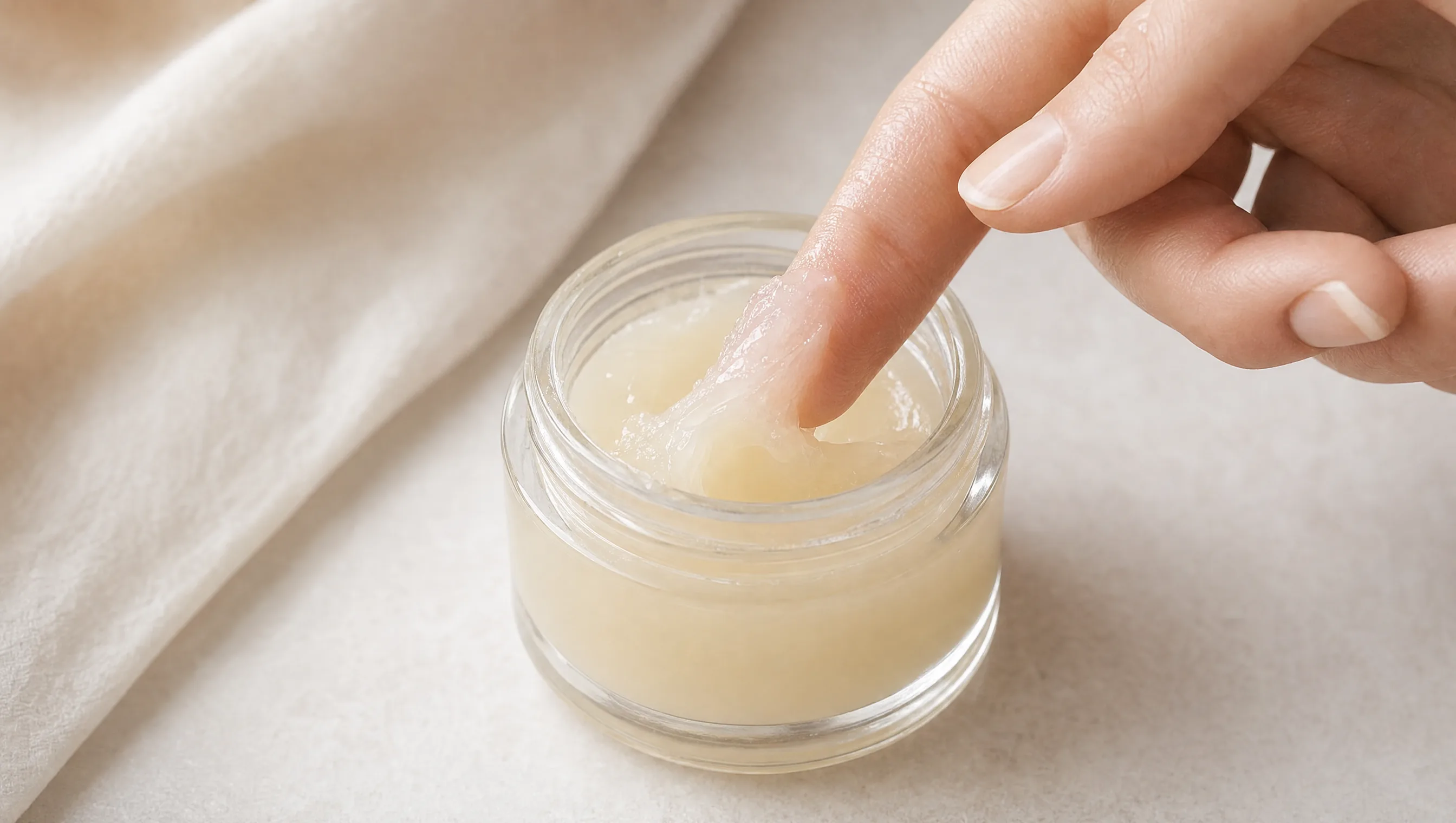
Panthenol: The Reliable Workhorse
Panthenol never trends, never headlines a product, and has genuinely good evidence behind it anyway — it just doesn't produce the kind of before-and-after that sells a serum.
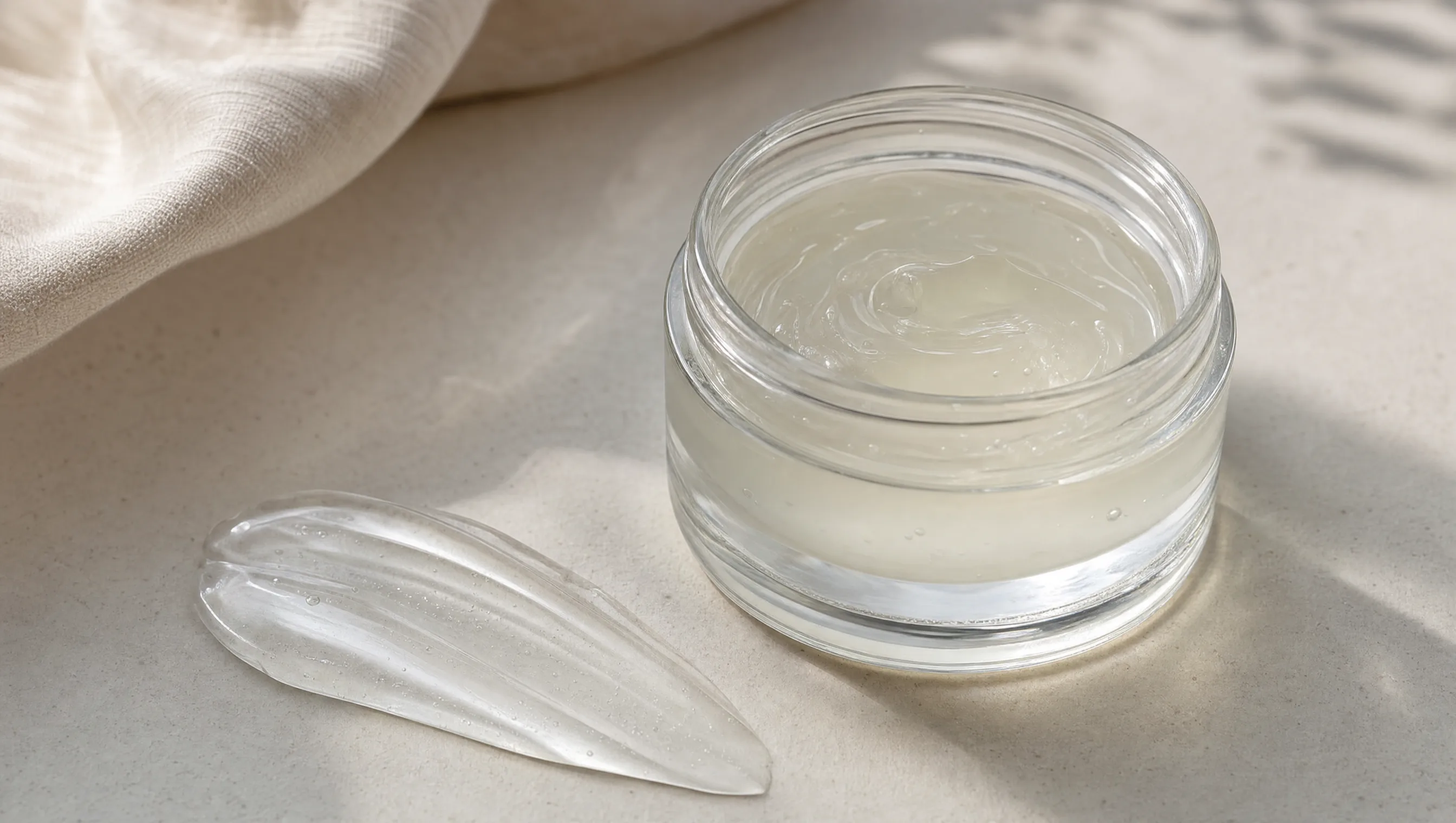
Some ingredients demand attention — retinoids, vitamin C, exfoliating acids. Panthenol demands almost none, which is probably why it’s so widely underrated: it appears in products across nearly every category, does its job reliably, and never generates the kind of dramatic before-and-after that sells a serum. That doesn’t make it a filler ingredient. It makes it one of the better-evidenced, best-tolerated supporting actives available — and worth understanding on its own terms rather than dismissed as padding.
What it actually is
Panthenol is the provitamin form of vitamin B5 (pantothenic acid). Applied to skin, it converts to pantothenic acid, a component of coenzyme A involved in a wide range of cellular processes. You’ll see it labelled as panthenol, D-panthenol (the active form), dexpanthenol, or provitamin B5 — all essentially the same ingredient under different names.
What it does
It’s a genuine humectant. Panthenol attracts and holds water in the stratum corneum, and because it penetrates into skin rather than sitting purely on the surface, it offers a somewhat deeper hydration effect than surface-only humectants manage. Multiple studies support meaningful hydration improvement at 1–5% concentrations, applied topically.
It supports the skin barrier. The evidence here points to several mechanisms working together — stimulating lipid synthesis, supporting structural proteins, and improving barrier function with regular use, including reduced transepidermal water loss and better overall resilience. This is arguably panthenol’s most useful property for anyone dealing with a compromised or reactive barrier.
It’s anti-inflammatory, modestly. Research shows a real reduction in redness and irritation, though it’s worth being precise about scale — this isn’t prescription-level anti-inflammatory action, it’s a meaningful soothing effect on already-irritated skin, and the two shouldn’t be conflated.
It supports wound healing. This is genuinely among panthenol’s best-evidenced uses — it accelerates epithelialisation, and medical-grade preparations are used clinically for burns, wounds and post-surgical care. In a skincare context, that translates to supporting recovery from irritation, over-exfoliation, or in-clinic procedures, rather than treating acute wounds itself.
What it doesn’t do
It’s worth being equally clear about the limits, because panthenol gets oversold in the opposite direction almost as often as it’s dismissed. It’s not a treatment active — it won’t clear acne, reduce the appearance of wrinkles, or fade pigmentation on its own; it supports skin health without addressing specific concerns directly. Its effects are subtle and cumulative rather than dramatic — you’re more likely to notice skin that feels more comfortable and better hydrated over time than to see a visible transformation. And it works best as part of a complete formulation rather than as a standalone solution to anything.
Where you’ll actually find it
Panthenol shows up in moisturisers for hydration and barrier support, in serums to help offset irritation from other actives, in cleansers to soften the stripping effect of surfactants, in sunscreens for general skin comfort, and specifically in post-procedure products designed for use after peels, lasers or microneedling. It’s equally popular in haircare, for similar moisture and strengthening reasons.
Concentration
Research generally uses 1–5% panthenol: 1–2% provides meaningful benefit and is common in general formulations, 2–5% is roughly the optimal range for most skincare purposes, and concentrations above that tend to show up in medical wound-healing preparations rather than cosmetic products. Most brands don’t disclose exact percentages, but panthenol appearing high in the ingredient list is a reasonable signal that it’s present at a meaningful concentration rather than a token amount.
Who tends to benefit most
Given how well-tolerated it is, the honest answer is close to everyone — but it’s particularly useful for sensitive skin needing soothing, non-irritating hydration; dry skin, thanks to its humectant properties; anyone using actives like retinoids or acids, where it can help offset some of the associated irritation without reducing their efficacy; compromised or damaged barriers that need support to recover; skin recovering from a professional procedure; and eczema-prone skin, which often reacts to ingredients that panthenol simply doesn’t trigger.
What it pairs well with
Panthenol is compatible with essentially everything in a standard routine. It can meaningfully reduce retinoid-induced irritation when the two are combined, offers a soothing counterbalance to AHA/BHA exfoliation, complements hyaluronic acid’s hydration through a different mechanism, supports barrier function alongside niacinamide, works synergistically with ceramides for barrier repair, and pairs naturally with centella asiatica for combined soothing and healing. There are no meaningful conflicts to watch for — panthenol doesn’t interact badly with common skincare ingredients, which is part of why formulators reach for it so often.
Choosing a product
Look for panthenol or dexpanthenol reasonably high in the ingredient list — ideally in the top half — if you want it doing real work rather than sitting at token levels. Products that combine it with other soothing or barrier-supporting ingredients tend to compound the benefit rather than dilute it. And treat its position far down an ingredient list as a sign it’s there for marketing rather than function.
Why it stays underrated
Panthenol doesn’t generate excitement for a few straightforward reasons: it’s been in use for decades, so there’s no novelty angle; its effects are supportive rather than transformative, which doesn’t lend itself to before-and-afters; and there’s no dramatic marketing story to tell about it. None of that reduces its actual value — it’s genuinely useful, reasonably well-evidenced for what it claims, and arguably deserves more credit in formulations than it typically gets. Its presence, especially at a meaningful concentration, is a reasonable signal that a formulator cared about comfort and barrier support rather than just headline actives.
Common questions
Does panthenol do anything on its own, or only as a supporting ingredient? It does have measurable standalone effects — hydration and mild anti-inflammatory action are genuinely supported by research — but it’s not a treatment active, so it’s best understood as valuable support within a routine rather than a reason to seek out a dedicated panthenol product.
Can panthenol cause irritation? Reactions are exceptionally rare, which is part of why it’s considered suitable even for sensitive, reactive or allergy-prone skin. If irritation does occur alongside panthenol, it’s worth looking at the rest of the formula rather than assuming panthenol is the cause.
Should I look for panthenol specifically when buying retinoid or acid products? It’s a reasonable thing to check for. Panthenol included alongside more irritating actives can meaningfully improve tolerability without compromising the active ingredient’s efficacy.
The bottom line
Panthenol won’t transform your skin or resolve a specific concern on its own, and it isn’t trying to. What it reliably does is hydrate, support the barrier, calm irritation, and help skin tolerate the more demanding actives around it — genuinely useful, well-evidenced, and compatible with almost everything. It’s not the headline ingredient in any routine, and it was never meant to be. Its value is in being the quiet, dependable part of a formulation that makes everything else work a bit better.