Snail Mucin: What the Science Actually Says
Snail mucin has gone from niche K-beauty curiosity to mainstream bestseller. The ingredient list is genuinely interesting — but the gap between what's in the filtrate and what reaches your skin is wider than the product pages suggest.

Snail mucin is having a moment that refuses to end. What started as a K-beauty oddity — yes, it really is snail slime — has become one of the most searched skincare ingredients in the UK, sitting on shelves in Boots alongside things that seem a lot more conventional. The ingredient’s popularity rests on a genuinely impressive-sounding composition and a handful of studies that suggest real, if modest, benefits. But the conversation around it tends to skip past the caveats, and there are more caveats than the product pages let on.
What it actually is
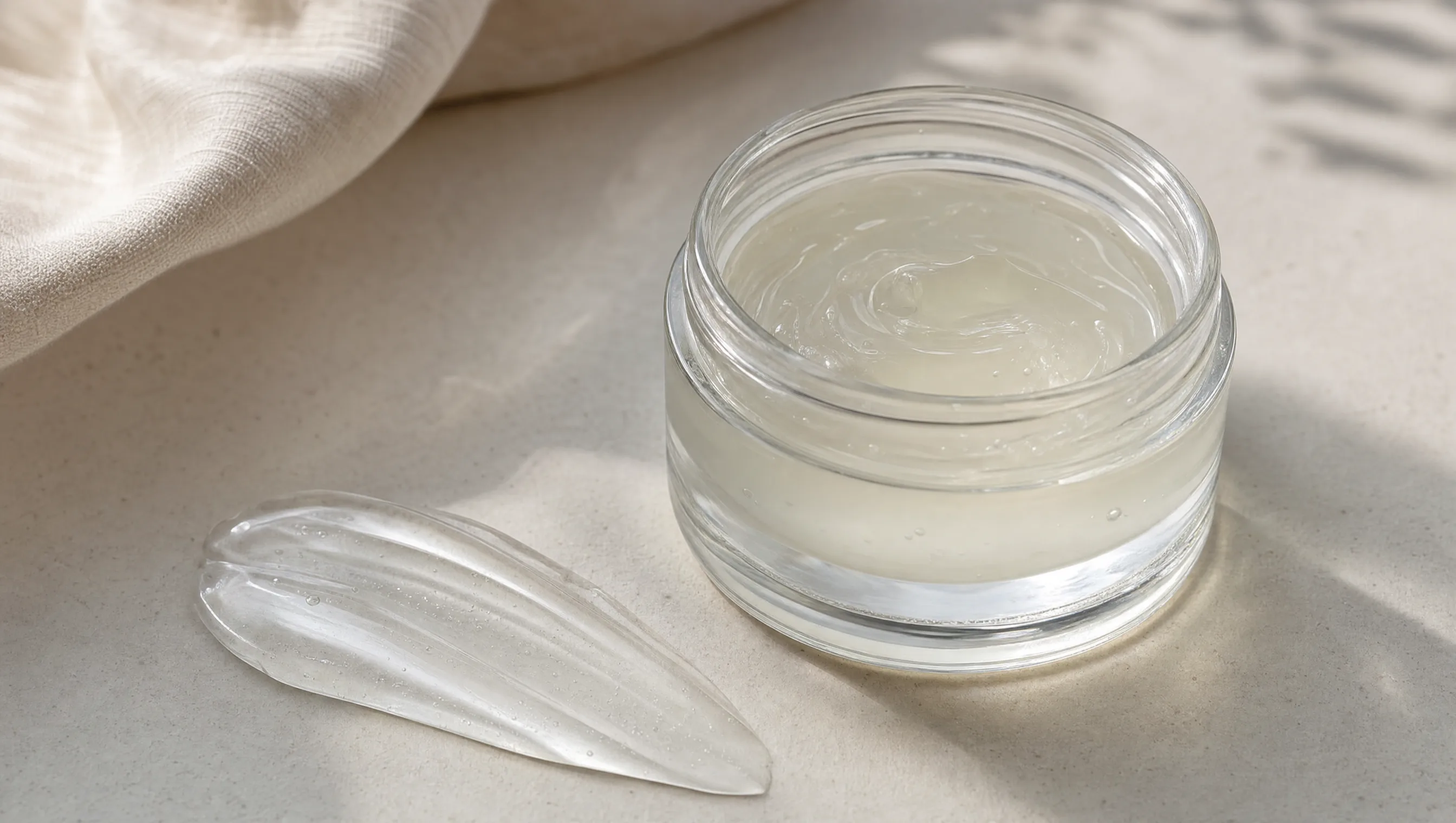
Snail secretion filtrate (SSF) — its INCI name — is a filtered version of the mucus secreted by land snails, usually Cornu aspersum (the common garden snail, formerly classified as Helix aspersa). The mucus is a complex mixture: glycoproteins, glycosaminoglycans (some of which are structurally similar to hyaluronic acid), allantoin, glycolic acid, zinc, copper, and antimicrobial peptides. On paper, it reads like someone designed a skincare ingredient from scratch.
The origin story you’ll see repeated everywhere involves Chilean snail farm workers in the 1980s who noticed their hands stayed unusually soft and healed small cuts quickly. It’s a compelling anecdote, but that’s all it is — an anecdote, not a study. The ingredient’s scientific case needs to stand on its own evidence, and fortunately there is some.
What the research shows
The evidence for snail mucin is real but early-stage — a handful of small clinical trials and a larger body of in vitro work. That puts it ahead of many trendy ingredients but well behind the genuine heavyweights like retinoids and L-ascorbic acid.
Hydration and texture. This is where snail mucin has its strongest practical case. The glycosaminoglycans and allantoin in the filtrate support moisture retention, and several small studies report improvements in skin hydration and texture with regular use. The effect is real, though comparable to what a well-formulated hyaluronic acid serum does — snail mucin isn’t offering something you can’t get elsewhere, just delivering it in a different vehicle.
Fine lines and photoageing. A few clinical studies — typically small, sometimes industry-funded — have found modest improvements in the appearance of fine lines and sun-damaged skin with topical snail secretion extracts. The results are encouraging but not dramatic, and the sample sizes are too small to draw firm conclusions. If you’re expecting retinoid-level results, you’ll be disappointed; if you’re looking for a gentler ingredient that might offer a subtle improvement over time, the evidence is at least pointing in the right direction.
Wound healing. In vitro studies consistently show that snail mucin components can promote fibroblast activity and accelerate wound closure in lab settings. That’s interesting biology, but in vitro results don’t automatically translate to what happens on intact human skin — the leap from a petri dish to a face is one of the biggest gaps in skincare science, and snail mucin is no exception.
Soothing and calming. Allantoin and the peptide components in the filtrate may contribute a mild calming effect. People with sensitive or reactive skin frequently report that snail mucin products feel soothing, and the ingredient is generally well-tolerated. Whether that’s the mucin itself or the typically gentle formulations it appears in is harder to untangle.
The parts nobody mentions
Here’s where the snail mucin story gets more complicated than the marketing allows.
Composition varies enormously. The exact makeup of snail mucin depends on the species, the snail’s diet, stress levels during collection, the season, and the extraction method. Two products both listing “snail secretion filtrate” on the label might contain meaningfully different things. There’s no industry-wide standardisation for what constitutes a consistent, effective extract, and very few brands disclose the specific composition of theirs.
Concentration is a mystery. A product might claim 96% snail mucin, but that’s 96% of the filtrate — a dilute, water-based solution, not 96% active compounds. The actual concentration of biologically interesting components (the glycoproteins, glycolic acid, peptides) within that filtrate is typically unstated. This isn’t unique to snail mucin — skincare labelling in general is less transparent than it appears — but it’s worth knowing when comparing products.
The studies use specific extracts, not off-the-shelf products. Most published research uses proprietary, standardised extracts (often called SCA — Secretia Cryptomphalus Aspersa) at controlled concentrations. Whether a consumer product using a different extract, from a different snail species, processed differently, delivers the same results is genuinely unknown. The research supports the concept of snail mucin, not necessarily the specific product on your shelf.
The ethics question
It’s reasonable to wonder how the mucin gets collected. Methods vary by manufacturer: some use manual stimulation (placing snails on textured surfaces), others use automated mesh systems, and some older methods involved salt or chemical irritants to provoke secretion — though most reputable brands now avoid the more stressful techniques. If this matters to you, and it reasonably might, look for brands that are transparent about their collection methods. If a brand won’t say how it’s done, that’s worth noting.
Who tends to get on with it
Snail mucin suits people looking for a hydrating, soothing layer in their routine — the kind of thing that makes skin feel comfortable and plump without heaviness. It works well for reactive or barrier-compromised skin because the formulations tend to be gentle and the glycoprotein matrix seems to support moisture retention without irritation.
Where it does less: if you’re after serious anti-ageing or pigmentation results, snail mucin is a supporting ingredient at best, not the lead. For visible wrinkle reduction, retinoids still have the deeper evidence base. For brightening, tranexamic acid or vitamin C will do more. And if your skin is already well-hydrated and happy, snail mucin might not add much that you’d notice.
Using it in practice
Most snail mucin products are essences or lightweight serums, designed to go on after cleansing and toning but before heavier creams or oils. Apply to damp skin — like most hydrating products, it works best when there’s moisture to work with. Layer it under your moisturiser to seal everything in. See the layering guide if you’re fitting it into a more involved routine.
It pairs well with most actives: niacinamide, vitamin C, retinoids, AHAs, and hyaluronic acid all sit comfortably alongside it. There are no known problematic interactions, which is one of snail mucin’s genuine strengths — it’s a very easy ingredient to build around.
Give it four to six weeks of consistent use before judging results. The benefits are cumulative and subtle, not overnight.
Common questions
Is snail mucin just hype? Not entirely — it contains genuinely useful components and the research, while limited, is pointing in a positive direction. But it is over-hyped relative to the current evidence, which is modest and early-stage.
Can I use it with retinol? Yes, and many people find it soothing enough to use on retinol nights as a calming, hydrating layer.
Is it comedogenic? Generally no. Snail mucin products tend to be lightweight and non-occlusive, and breakout reports are uncommon. But as with anything, individual reactions happen.
Does it replace hyaluronic acid? It can fill a similar role — both are hydrating — but they work through slightly different mechanisms. Using both isn’t redundant, but you also don’t need both.
Is it safe for sensitive skin? For most people, yes. It’s one of the better-tolerated trendy ingredients. Patch-test first if you react to many things.
The bottom line
Snail mucin is a legitimate ingredient with some genuinely interesting biology behind it — not a gimmick, but also not the miracle that social media makes it out to be. The evidence supports it as a hydrating, mildly soothing ingredient that most skin types tolerate well. What it isn’t is a proven powerhouse: the studies are small, the standardisation is poor, and the gap between research-grade extracts and consumer products is real and largely unaddressed.
Use it if you enjoy the texture, want a gentle hydration step, or find it soothing alongside stronger actives. Don’t use it expecting it to replace a retinoid, a vitamin C serum, or anything else with decades of robust evidence behind it. A good snail mucin essence, used consistently, is a pleasant and probably helpful addition to a routine — and that’s a perfectly reasonable thing for an ingredient to be, even if it’s not the miracle the marketing department would prefer.