Pores: What You Can Change and What You Can't
The skincare industry has built an entire product category around 'minimising' pores. Some of those claims are grounded in real biology — but the idea that pores open, close, or disappear is one of skincare's most persistent myths.

“Pore-minimising” has become its own product category — serums, primers, toners, masks, all promising to shrink, tighten, or close something that can’t actually be closed. Some of those products contain ingredients that genuinely affect how pores look. But the framing is almost always wrong, and buying into it sets you up for disappointment with products that are, in some cases, doing real work.
What pores actually are
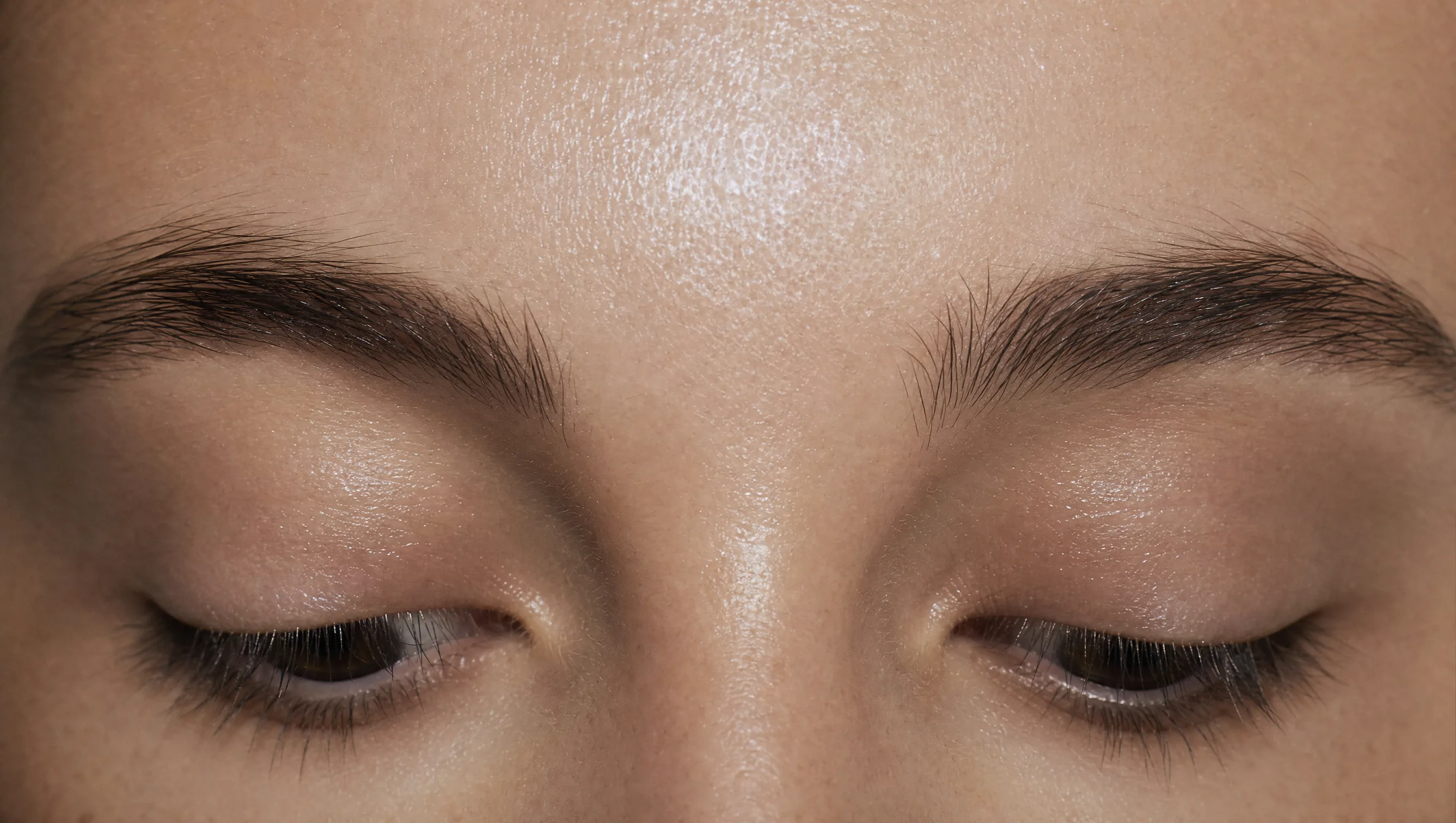
A pore is the surface opening of a hair follicle. Each one connects to a sebaceous gland underneath, which produces the sebum that keeps skin lubricated and part of its protective barrier intact. You have roughly five million of them, and they’re not optional — they’re part of how skin functions. The visible ones, the ones most people mean when they say “my pores are huge,” are concentrated on the nose, forehead, chin and cheeks, where sebaceous glands tend to be largest and most active.
Pore size is primarily determined by genetics. If your parents had visible pores, you probably will too, and no product is going to override that inheritance. What can change — and what the genuinely useful products address — is how prominent those pores appear, which is a different thing from their actual size.
Why some pores look bigger than others
Three main factors determine how visible a pore is, and only one of them is truly fixed.
Genetics and skin type. Oilier skin tends to have more visible pores because the sebaceous glands are larger and more productive. This is the baseline — and the part no product changes.
Sebum and debris. When pores fill with sebum, dead skin cells, and environmental debris, the material stretches the pore opening slightly and makes it more visible. This is the mechanism behind the “clogged pore” look, and it’s the one most responsive to topical treatment.
Age and sun damage. As skin loses collagen and elasticity — through ageing and cumulative UV exposure — the supporting structure around each pore weakens, and the openings appear larger. This isn’t the pore growing; it’s the scaffolding around it softening. It’s also why sunscreen is, ironically, one of the better long-term strategies for pore appearance, even though nobody markets it that way.
The “open and close” myth
Pores don’t open and close. They don’t have muscles. Steam doesn’t “open” them and cold water doesn’t “close” them. This is one of skincare’s most durable myths, repeated so often that it’s treated as common knowledge despite being straightforwardly wrong.
What steam does is soften the sebum and debris inside a pore, making extractions slightly easier — which is useful in a professional facial, and where the misconception probably started. But the pore itself doesn’t dilate or contract. Products claiming to “close” or “tighten” pores are describing something that isn’t physically possible. At best, they temporarily reduce the appearance of pores through other mechanisms — mattifying the surface, depositing a blurring film, or reducing sebum output short-term. Those aren’t bad outcomes, but they’re not what the marketing says.
Sebaceous filaments aren’t blackheads
Those tiny grey or yellowish dots on your nose that refill within a day of using a pore strip? Those are sebaceous filaments, not blackheads. They’re a normal structural feature of the pore — a thin coating of sebum that lines the follicle wall. Everyone has them. They’re not a sign of dirty skin, and they’re not a problem to solve.
Blackheads (open comedones) are genuinely blocked pores where a plug of oxidised sebum and dead cells sits at the surface. The difference matters because blackheads respond to treatment — salicylic acid, retinoids, consistent gentle exfoliation — while sebaceous filaments will always come back, because they’re supposed to be there. Pore strips remove them temporarily, but they refill within 24–48 hours because that’s what pores do. Aggressive, repeated extraction of something that’s meant to be there can irritate and inflame the surrounding skin, potentially making pores look worse.
What actually helps pore appearance
No product eliminates visible pores. But several evidence-backed approaches can meaningfully reduce how prominent they look, by addressing the factors that make them more visible in the first place.
Retinoids are the strongest single option. They accelerate cell turnover inside the follicle, reduce the build-up of dead cells that stretch pore openings, and over months of use, stimulate collagen production in the surrounding skin — firming the scaffolding around each pore. The evidence here is solid, with multiple studies showing measurable improvement in pore appearance over 12–24 weeks. See the retinoid comparison for how different forms stack up.
Salicylic acid (BHA) is oil-soluble, so it actually penetrates into the pore rather than sitting on the surface like water-soluble exfoliants. Regular use keeps pores clearer, which reduces the stretching effect of trapped sebum and debris. It’s particularly effective for the nose and T-zone, where sebum production is highest — we cover how it works in more detail separately.
Niacinamide at 2–5% has some evidence for reducing sebum production, which in turn can reduce pore prominence in oilier skin. The effect is modest — don’t expect a transformation — but it’s real and the ingredient carries almost no irritation risk. More on the evidence and its limits in the niacinamide guide.
AHAs (glycolic, lactic, mandelic) exfoliate the skin surface, smoothing the texture around pore openings and removing the dead-cell layer that can make them look more prominent. They don’t get inside the pore the way salicylic acid does, but the surface-level improvement is visible.
Sunscreen. UV damage degrades collagen, the protein that keeps skin firm and pore edges tight. Consistent sun protection won’t shrink existing pores, but it slows the process that makes them look progressively larger with age. It’s the least glamorous pore strategy and one of the most effective long-term.
Clay masks temporarily absorb surface oil and can make pores look less visible for a few hours to a day. The effect is cosmetic and short-lived — useful before an event, not a long-term solution.
What doesn’t work
Pore strips physically yank out sebaceous filaments and surface debris. Satisfying, yes. Lasting, no. The filaments refill within a day or two, and repeated use can damage the surrounding skin.
Ice cubes and cold water won’t “close” anything — see the myth section above. You might get a very temporary tightening of the skin from vasoconstriction, which disappears within minutes.
“Pore-minimising” primers and cosmetics create a temporary visual blur, which is fine for what it is — but the pores are still there, and the product washes off. Worth knowing what you’re buying: a visual effect, not a structural change.
Over-cleansing. Scrubbing your face harder doesn’t clean pores more thoroughly. If anything, it strips the skin barrier, triggers compensatory oil production, and makes pores look more prominent than they did before you started. Gentle cleansing, twice a day, is enough.
A practical approach
If pore visibility genuinely bothers you, here’s a framework grounded in what actually has evidence behind it:
- Cleanse gently — a mild, non-stripping cleanser, morning and evening.
- Use a BHA — salicylic acid 1–2%, two to three times a week initially, to keep pores clear.
- Add a retinoid — the heavy lifter for pore appearance long-term, but introduce it slowly (see our guide on reintroducing actives if you’re new to them).
- Sunscreen daily — protecting collagen is protecting pore structure.
- Niacinamide — a low-risk addition for oil control if sebum is the main issue.
Give any approach twelve weeks minimum before deciding it isn’t working. Pore appearance changes slowly because the underlying mechanisms — collagen remodelling, cell turnover normalisation — are gradual processes.
Common questions
Can I permanently shrink my pores? No. Pore size is largely genetic, and no topical product changes the physical structure of a pore. What you can change is how visible they are, by managing sebum, keeping them clear, and protecting the skin’s collagen structure.
Do pore strips damage skin? Used occasionally and gently, they’re unlikely to cause harm. Used aggressively or frequently, they can irritate the skin around the pore, strip away protective surface oils, and potentially make pore appearance worse over time.
Why are my pores more visible as I age? Loss of collagen and elastin reduces the firmness of the skin surrounding each pore, making the openings look larger. UV exposure accelerates this process significantly, which is another reason consistent sun protection matters.
Should I squeeze out sebaceous filaments? No. They’re a normal part of pore function. Extracting them is pointless — they refill within a day — and the pressure and irritation from squeezing can damage surrounding tissue and trigger inflammation.
Do professional treatments work better than topicals? Some do, for some people. Chemical peels, microneedling, and certain laser treatments can improve pore appearance beyond what topicals alone achieve, but they carry costs, downtime, and risks that topicals don’t. They’re an escalation option, not a starting point.
The bottom line
Pores are a feature, not a flaw — they’re part of how skin functions, and having visible ones doesn’t mean something is wrong with your skin. That said, if their appearance bothers you, there are genuinely effective ways to make them less prominent: retinoids, salicylic acid, sun protection, and patience. What won’t work is anything promising to close, shrink, or eliminate them — those claims are selling a biological impossibility, and the sooner that myth retires, the sooner people can stop buying products that were never going to deliver on the promise printed on the box.
This article is for informational purposes only and does not constitute medical advice. If you have concerns about persistent skin changes, consult a dermatologist or your GP.