Salicylic Acid: Beyond "Unclogs Pores"
Every acne product with salicylic acid uses the same tagline about unclogging pores. That's true, but it undersells an ingredient that's also anti-inflammatory, mildly antibacterial, and one of the few actives that can actually get inside a pore rather than just working the surface.
“Unclogs pores” is the tagline on nearly every salicylic acid product, and it’s accurate as far as it goes — it just leaves out most of what makes this beta-hydroxy acid (BHA) work the way it does. Understanding the actual mechanism, particularly the one property that sets it apart from AHAs, makes it much easier to use well.
What it actually is
Salicylic acid is a beta-hydroxy acid derived from willow bark. The property that matters most, and that separates it from AHAs like glycolic acid, is that it’s oil-soluble rather than water-soluble. That single trait explains most of why it’s specifically suited to oily and acne-prone skin, and why AHAs can’t do the same job.
How it actually works
Salicylic acid is keratolytic — it dissolves keratin, the protein making up the outer layer of skin cells, loosening the bonds between them and encouraging normal shedding rather than the build-up that leads to blocked pores. Because it’s oil-soluble, it can dissolve into the sebum that fills a pore in a way water-soluble AHAs simply can’t; once inside, it exfoliates the pore lining, helps break down sebum plugs, and reduces the impactions that become blackheads and whiteheads. That combination makes it genuinely comedolytic rather than just a surface exfoliant.
It’s also anti-inflammatory in its own right — it’s chemically related to aspirin (acetylsalicylic acid), and that relationship shows up as a real reduction in the redness and swelling associated with acne lesions, not just an exfoliation effect. It contributes to bacterial control too, by lowering pH within the pore and removing some of the material bacteria feed on, though it’s not a primary antibacterial the way benzoyl peroxide is — think supporting role, not lead.
Concentration and formulation actually matter here
Products in the 0.5–1% range are gentle enough for maintenance or sensitive skin; 1–2% is the standard range for most over-the-counter formulas and works for mild-to-moderate acne; 2% is the ceiling for OTC products in many markets and is generally well-tolerated. Professional peels go considerably higher (10–30%), but those aren’t for daily home use.
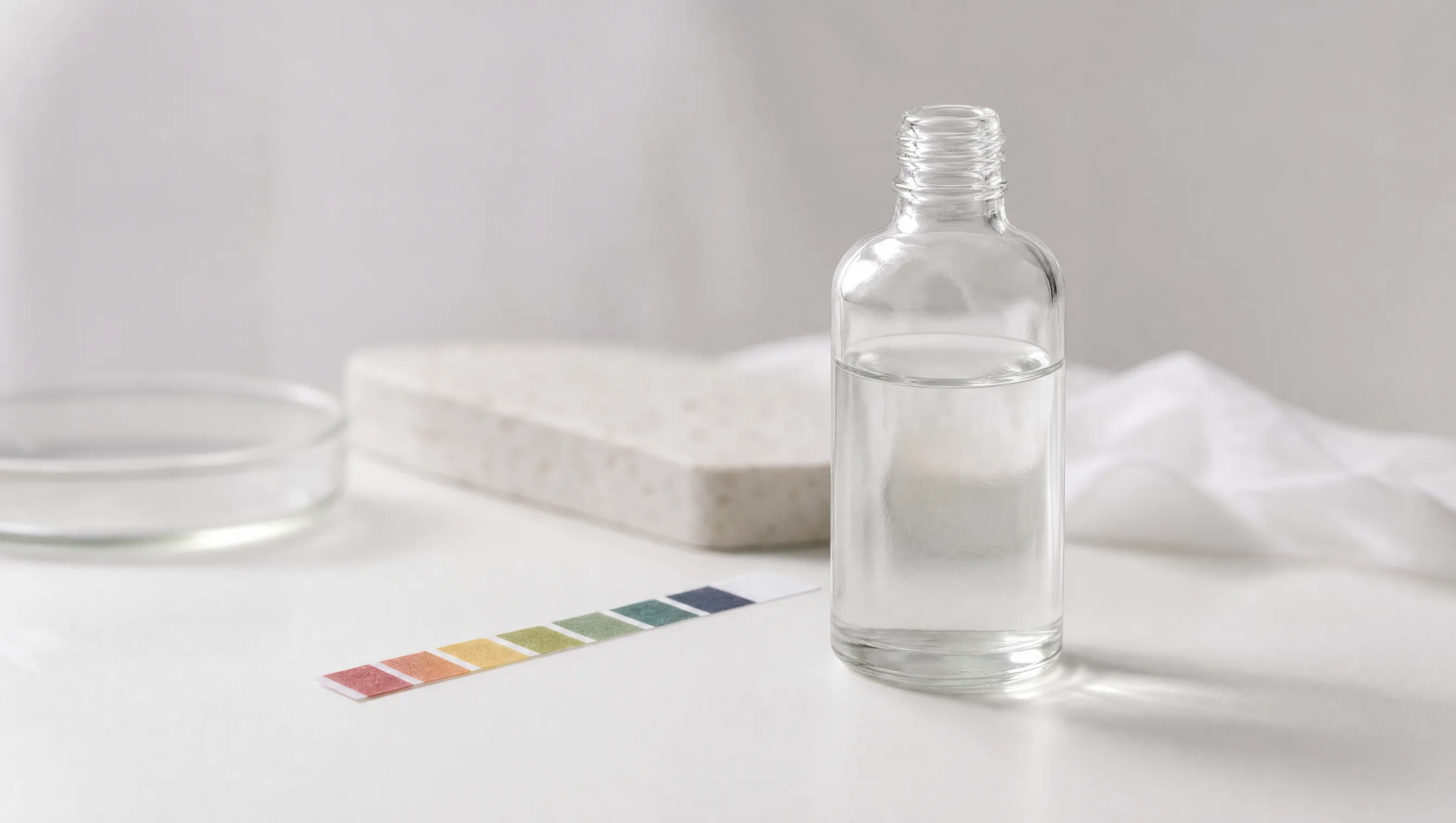
pH is the detail most people miss. Salicylic acid needs a low pH (roughly 3–4) to stay in its active, free-acid form — at higher pH it becomes ionised and penetrates less effectively. Some products are formulated at a higher, more comfortable pH specifically to reduce stinging, but that comfort comes at the cost of efficacy. If a salicylic acid product feels suspiciously gentle and non-tingly, that’s worth noting rather than assuming it’s simply a superior formulation.
Leave-on formats (serums, toners, moisturisers) give longer contact time and generally better results; wash-off formats (cleansers, masks) give shorter exposure, less irritation, and are a reasonable way to introduce salicylic acid gradually or for more reactive skin. Some people apply a wash-off product, leave it on skin for a few minutes before rinsing, as a middle-ground approach.
What it actually treats
The primary use is acne — blackheads, whiteheads, mild-to-moderate inflammatory acne, and ongoing maintenance to prevent new breakouts. It’s less effective for severe cystic acne, which needs more aggressive treatment, and for hormonal acne, where it may help at the margins but doesn’t touch the underlying driver.
Beyond acne, it can help manage oily skin generally by keeping pores clear without over-stripping moisture, reduce the appearance of sebaceous filaments (the grey or yellow dots on the nose that aren’t quite blackheads), and smooth the bumpy texture of keratosis pilaris when formulated for the body. At considerably higher OTC concentrations, it’s also a genuine first-line wart treatment — a different application of the same keratolytic mechanism.
Using it well
Start conservatively: a low concentration (0.5–1%), a wash-off format, or every-other-day application, whichever fits your skin best, and use that period to assess tolerance before increasing. Once it’s clearly tolerated, move to 2%, switch to leave-on formats, and increase frequency to daily or twice daily if your skin agrees.
It works either morning or evening — if you’re also using other actives like retinoids or AHAs, it’s generally sensible to separate them by time of day rather than layering everything at once. Apply after cleansing and before heavier products, as a serum or toner step. Expect some improvement in blackheads within two to four weeks, inflammatory acne improvement over four to eight weeks, and better results the longer you stay consistent — this is a maintenance ingredient as much as a treatment.
Side effects, and who should be cautious
Dryness is the most common side effect, generally manageable with a non-comedogenic moisturiser. Mild, brief stinging on application is normal, particularly early on; persistent burning isn’t and is worth dialling back for. Mild peeling can occur and usually resolves with continued use, while more pronounced irritation or signs of over-exfoliation — tight, shiny, sensitised skin — call for a break and a focus on barrier repair rather than pushing through.
Those allergic to aspirin or salicylates should avoid it. Pregnant women are generally advised to avoid high concentrations or large-surface-area use; low-concentration facial use is debated in the literature, so this is a conversation for your own doctor rather than a blanket rule. Very dry or eczema-prone skin may find it worsens barrier issues, and anyone already over-exfoliated should let skin recover before reintroducing it.
How it compares to AHAs
Salicylic acid is oil-soluble, penetrates pores, and is anti-inflammatory — best suited to oily, acne-prone skin, though less effective than AHAs for surface texture and fine lines. Glycolic and lactic acid are water-soluble and work at the surface, better for texture, dullness and fine lines, with lactic acid also bringing a hydrating benefit; either can be too much added exfoliation on very oily, acne-prone skin already using a BHA. Using both is possible — alternating by time of day or day of the week, or using a well-formulated combination product — but watch closely for over-exfoliation rather than assuming more acid always means more result.
What it pairs well with, and what needs care
Niacinamide complements it well, supporting barrier function and oil control alongside salicylic acid’s exfoliation. Hyaluronic acid helps offset the drying tendency. Centella asiatica adds a soothing counterbalance. Azelaic acid works through different mechanisms entirely and combines reasonably for acne.
Retinoids need more care — both can be irritating, so layering them directly is generally best avoided in favour of using them at different times. AHAs need the same caution; one or the other tends to be enough for most routines. Benzoyl peroxide pairs effectively for acne but the combination can be drying, so splitting them by time of day (benzoyl peroxide in the morning, salicylic acid in the evening, for instance) tends to work better than combining both at once. Vitamin C can work alongside it but the combined low pH of some vitamin C serums plus salicylic acid may push some skin into irritation.
Common questions
Is a higher percentage always better? No — 2% is the practical ceiling for most OTC daily use, and pushing beyond what’s tolerated adds irritation without proportionate benefit. A well-formulated, correctly acidic 1–2% product usually beats a higher concentration formulated at a comfort-focused, less effective pH — the same “higher isn’t automatically better” pattern shows up across skincare actives generally.
Can I use salicylic acid every day? Many people can once tolerance is established, but it’s worth building up gradually rather than starting there, and watching for dryness or over-exfoliation as ongoing signals.
Does an expensive salicylic acid product work better than a cheap one? Not inherently — salicylic acid itself isn’t an expensive ingredient, and effective formulations exist at low price points. Premium pricing more often reflects branding than superior formulation.
The bottom line
Salicylic acid is a well-established, evidence-based ingredient for acne and oily skin, and its oil solubility is genuinely what sets it apart from AHAs, letting it work inside the pore where a lot of acne actually starts. For blackheads, whiteheads and mild-to-moderate acne it remains a sensible first-line option — less aggressive than benzoyl peroxide or retinoids, which makes it a reasonable place to begin. Used consistently, formulated at the correct pH, and combined sensibly with the rest of a routine, it does its job reliably without needing to be dramatic about it.