Sebum: Friend or Foe?
Oily skin, shiny T-zones, clogged pores — sebum gets blamed for all of it. But it's also doing genuine protective work, and the products that fight it hardest often make oiliness worse, not better.
Sebum has a poor reputation. Shiny T-zones, clogged pores, breakouts — most of it gets pinned on this one substance, and a lot of skincare is built around the idea that less sebum is simply better. That’s an oversimplification. Sebum isn’t a design flaw; it’s doing real protective work, and understanding what it’s actually for makes it easier to manage the parts that go wrong without fighting your own biology in the process.
What it actually is
Sebum is an oily secretion produced by sebaceous glands attached to hair follicles, concentrated on the face, scalp and upper body. It’s a genuinely complex mixture — roughly 40% triglycerides, 25% wax esters, 12% squalene, 15% free fatty acids, and 8% cholesterol and cholesterol esters — and that composition varies between individuals and shifts with age, hormones and general health. Production runs continuously, driven mainly by androgens, with genetics, age and some environmental factors playing supporting roles.
What it’s actually for
Sebum forms part of the skin’s barrier function: it contributes to the acid mantle alongside sweat, helps limit water loss, and adds a degree of physical protection against the environment. Skin without adequate sebum tends to be dry, vulnerable and easily irritated — which is worth remembering before treating “oily” as purely a problem to solve.
It also has genuine antimicrobial properties. The free fatty acids in sebum have antibacterial activity, and sebum composition influences the skin microbiome more broadly, helping favour beneficial organisms over pathogens. It carries vitamin E and other antioxidants to the skin surface, offering some protection against oxidative stress. And it keeps skin supple, which matters particularly around high-movement areas like the eyes and mouth, where dryness shows up as cracking rather than just tightness.
Where it goes wrong
The problems aren’t really about sebum existing — they’re about quantity, composition, and what happens to it once it’s on the skin.
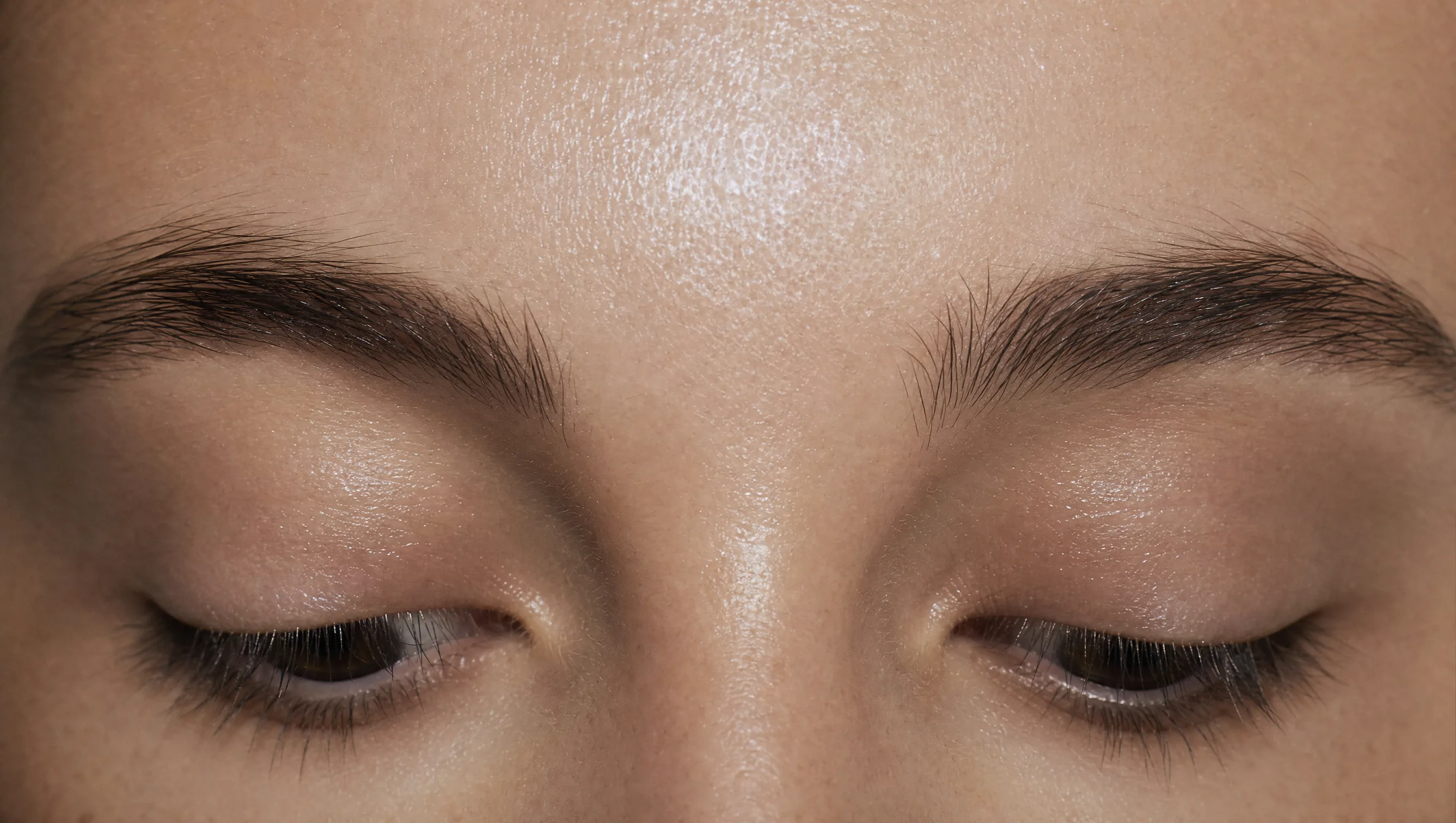
Overproduction (seborrhoea) leads to the oily appearance most people are trying to manage, along with pores that appear enlarged from repeated stretching and a higher risk of breakouts.
Composition matters as much as volume. Higher squalene levels appear to raise oxidation risk, altered fatty acid profiles may promote inflammation, and some sebum compositions seem to favour bacterial growth over others — so two people with similarly “oily” skin can have meaningfully different underlying chemistry.
Oxidised sebum behaves differently again. It becomes more comedogenic, can trigger inflammation, and changes colour in ways that contribute to how blackheads look. Antioxidant use may help counteract some of this oxidation, though it isn’t a complete fix on its own.
Bacterial interaction is part of the acne picture, not the whole of it. Sebum feeds Cutibacterium acnes, and excess sebum plus bacteria plus inflammation is a recognised route to acne. But sebum on its own isn’t sufficient to explain it — plenty of people with oily skin never develop acne, and the condition involves immune response factors that go beyond oil production.
The stripping mistake
A common response to visible oil is to attack it directly — harsh cleansers, aggressive exfoliation, astringents aimed at eliminating shine entirely. This tends to backfire: it damages the barrier, may trigger compensatory oil production (the mechanism is debated, but plausible and widely reported anecdotally), leaves skin dehydrated while still oily, and increases sensitivity and inflammation generally. Chasing a fully matte finish this way often produces the opposite of what people are after — see why over-exfoliation backfires for the mechanics of that particular trap.
What tends to actually help
Gentle cleansing, twice daily and no more — gel or foam formulas suited to oily skin, soap bars avoided. Over-cleansing strips protective oils and can make things worse.
Moisturising anyway. Oily skin still needs hydration; lightweight, oil-free or non-comedogenic formulations do that without adding to the shine.
Targeted actives, used consistently. Niacinamide at 2–5% appears to normalise oil output gradually with regular use, rather than switching it off. Salicylic acid is oil-soluble, so it can get into sebaceous material inside pores and help keep them clearer, with a modest effect on oiliness generally. Retinoids can normalise sebaceous gland activity over time and support pore appearance and acne prevention alongside that. Clay masks can absorb excess oil temporarily and are fine occasionally, but tend to be drying with regular use. There’s some evidence that zinc, oral or topical, supports oil regulation too, though the evidence base is thinner than for niacinamide or retinoids.
Not fearing oil-based products. It sounds counterintuitive for oily skin specifically, but certain oils — jojoba, which closely mimics sebum’s own composition, and squalane, which is non-comedogenic — can help balance skin rather than adding to the problem.
Accounting for age and environment. Sebum production surges through adolescence with the androgen increase, stays relatively high but tends to stabilise through the 20s and 30s, then declines from the 40s onward, more sharply for women post-menopause, as the concern shifts from managing excess oil to maintaining adequate moisture. Humidity and season affect how sebum behaves too — what works in a hot, humid climate may not suit a cold, dry one. A routine built for oily 20-something skin can end up too stripping for the same person twenty years later, which is worth revisiting rather than assuming your skin type is fixed for life.
Common questions
Does drinking more water reduce oiliness? Not meaningfully — sebum production is driven mainly by hormones, not hydration status.
Will a moisturiser make oily skin worse? Generally no, provided it’s lightweight and non-comedogenic. Skipping moisturiser tends to trigger more barrier stress, not less oil.
Do pores actually get “smaller” with treatment? Pore size is largely fixed by genetics and skin structure, but reducing the stretching caused by excess sebum and congestion can make pores look less prominent.
Is oily skin more prone to acne, always? More likely, but not guaranteed — plenty of people with oily skin never develop acne, and acne involves inflammatory and immune factors beyond oil production alone.
The bottom line
Sebum isn’t the enemy — it’s a functional part of the skin’s protective system, doing genuine work for barrier integrity, antimicrobial defence and flexibility. The problems come from excess or altered production, oxidation, and its interaction with bacteria and inflammation, not from sebum simply existing.
The sensible approach is balance rather than elimination: manage excess where it’s genuinely a problem, use ingredients with some evidence behind them (niacinamide, salicylic acid, retinoids where appropriate), and stop short of stripping skin in pursuit of a matte finish that isn’t natural anyway. Work with what your skin is producing rather than against it, and it tends to behave better for it.